Buyer Guides By Topic.
Browse the buyer guides available in this topic.
Key Takeaways
- Better Clarity: Borosilicate glass is much clearer than regular (soda-lime) glass. It lets more light through (92-96%) and doesn’t have a green tint.
- Truer Colors: Because it’s so clear, borosilicate glass shows the true color of the liquid or product inside, which is important for spirits like whiskey and tequila.
- Looks More Premium: The high clarity and ability to be crafted into unique bottle shapes make products in borosilicate glass look higher quality on the shelf.
- More Durable: This type of glass is stronger and resists scratches and temperature changes better than regular glass.
The type of glass used for a bottle or jar changes how the product inside looks. Two main types of glass are borosilicate and traditional soda-lime glass. Borosilicate glass offers superior clarity and visual appeal. This makes it the best choice for premium products where looks matter. Understanding the difference helps show why brands choose borosilicate for their best items. From a simple glass jar to a complex whiskey decanter, the material makes a big difference in how customers see the product.
What Makes Glass Look Clear?
The clearness of glass depends on a few things. One is called transmittance, which measures how much light can pass through it. Another is the refractive index, which is about how much the glass bends light. Good optical clarity means the glass has very few impurities, like iron, and a smooth surface. These properties are measured with special tools to ensure quality. For a product to look its best, the glass must be as clear as possible. This is a key difference between borosilicate and standard glass.
Borosilicate Glass: The Clear Winner for Your Products
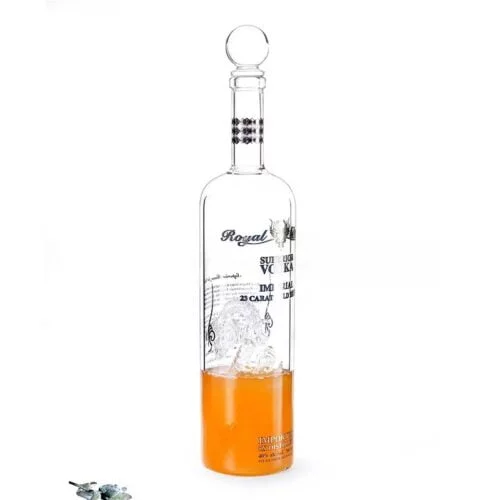
Borosilicate glass is made with silica and boron trioxide. This mix gives it amazing optical properties. It has a very high light transmittance rate of 92-96%. This means almost all light passes right through it, making it look crystal clear. As a glassware expert, I’ve seen firsthand how this affects perception. A whiskey in a borosilicate decanter appears richer because there’s no green tint to dull its amber color. This is why it’s the top choice for high-end borosilicate glass bottles. The clarity gives a true view of the contents.
Why Does Regular Glass Have a Green Tint?
Traditional soda-lime glass is made with silica, soda, and lime. It also has more iron impurities. This iron content gives the glass a slight greenish tint, which you can easily see if you look at the edge of a thick piece of glass. This tint can change the way colors look through the glass. Soda-lime glass lets less light through, usually around 82-84%. While it works for many everyday items, it doesn’t offer the pure, clear view of borosilicate. You can learn more about the differences in glass explained: soda-lime vs borosilicate.
How Glass Bends Light (Refraction)
Refraction is how glass bends light. Borosilicate glass has a lower refractive index (1.47) than soda-lime glass (1.51). A lower refractive index means less light distortion and less color fringing. In simple terms, things look sharper and colors stay true when you look through borosilicate glass. This is very important for displaying products. A customer can see the exact color and texture of what’s inside without any visual changes. This optical purity is a key feature of luxury bottle shapes, where the design and the contents must be seen perfectly.
Making Your Product Look Great on the Shelf
How a product looks on a shelf can make or break a sale. Clear glass packaging builds trust because customers can see exactly what they are getting. High-quality glass, like borosilicate, makes a product feel more valuable. The clarity and shine suggest the item inside is also high-quality. This is why many premium brands invest in custom bottle designs. A unique and clear bottle can catch a customer’s eye and make them more likely to buy the product. It’s the first impression, and it matters a lot.
Ingcho’s Advantage: Crafting with Pure Borosilicate
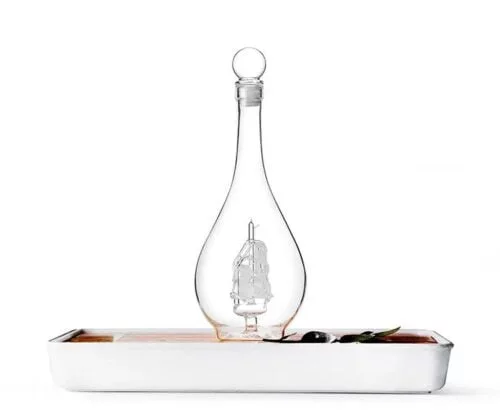
At Ingcho, we specialize in transforming high-quality borosilicate glass tubes and rods into beautiful glassware. Our process combines modern techniques with traditional craftsmanship to create products that are both elegant and strong. All our Ingcho products benefit from the natural advantages of borosilicate glass. This includes being resistant to heat and corrosion while staying crystal clear. As an expert who has overseen this process, I can attest to the level of detail required. Each piece is made to meet international standards, ensuring the final product has the optical purity our clients expect.
Perfect for Storing Foods and Drinks
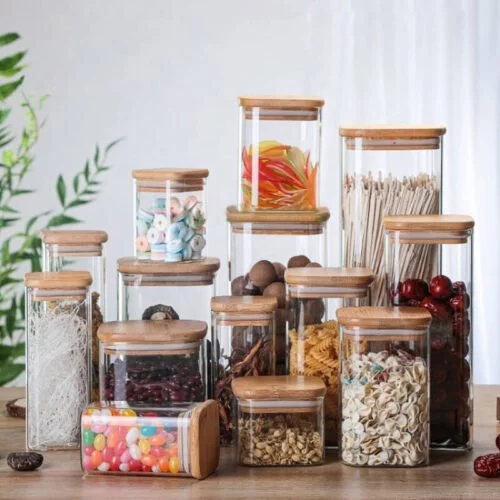
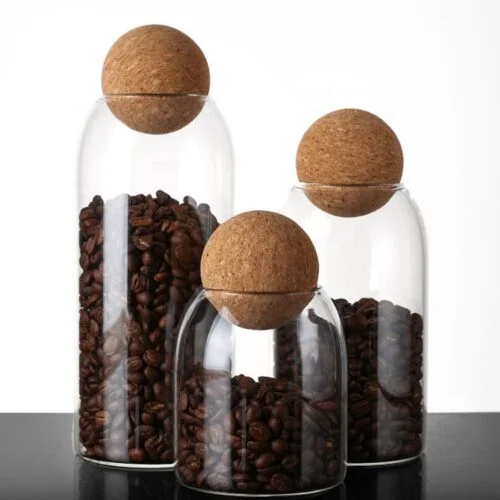
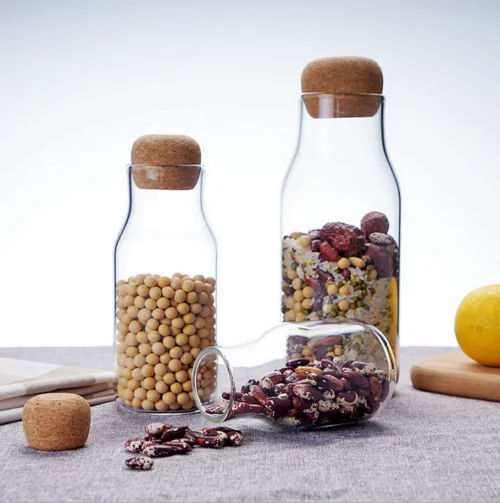
Borosilicate glass is excellent for storage. It does not absorb moisture or odors, so the contents stay fresh and pure. This is why our glass jars are so popular for things like coffee, spices, and preserves. The glass is non-porous and smooth, which also makes it very easy to clean. Lids, like bamboo with rubber seals or natural cork, provide a tight closure to keep air out. This combination of a pure glass body and a secure lid makes borosilicate jars a practical and attractive choice for any kitchen.
Unique Designs Made Possible with Borosilicate Glass
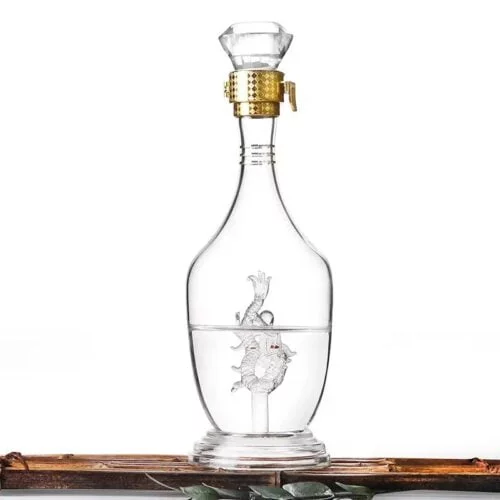
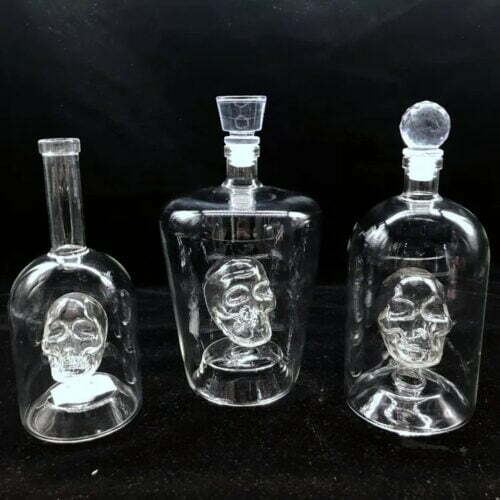
The strength and workability of borosilicate glass allow for incredible creativity. It can be shaped into complex and artistic forms that are difficult to achieve with standard glass. This allows for truly unique products, like the famous Tequila Bottle Skull or intricate dragon-shaped decanters. These designs are not just containers; they are pieces of art that enhance the brand’s story. For collectors and consumers looking for something special, these bottles offer a visual experience that makes the product inside even more desirable. This is where craftsmanship meets high-performance material.
Borosilicate vs. Soda-Lime Glass: A Quick Comparison
This table shows the main differences between the two types of glass.
| Feature | Borosilicate Glass | Soda-Lime Glass |
|---|---|---|
| Clarity | Crystal Clear | Clear with Green Tint |
| Light Transmission | 92-96% | 82-84% |
| Main Components | Silica, Boron Trioxide | Silica, Soda, Lime |
| Heat Resistance | Very High | Moderate |
| Best For | Premium Drinks, Labware, Cookware | Everyday Jars, Windows |
Frequently Asked Questions
What is borosilicate glass? Borosilicate glass is a special type of glass made with silica and boron trioxide. This makes it very strong, resistant to temperature changes, and extremely clear. It’s often used for high-quality kitchenware, laboratory equipment, and premium custom glass bottles.
Is borosilicate glass better than regular glass? For many uses, yes. It is more durable, handles heat better, and has superior optical clarity. It doesn’t contain the iron impurities that give regular soda-lime glass a green tint, so colors appear truer. This makes it a better choice for products where presentation is important.
Why is borosilicate glass more expensive? The manufacturing process for borosilicate glass is more complex, and the raw materials, particularly boron trioxide, are more costly. The higher performance and purity of the final product are reflected in its price.
Can you see a difference between the two glasses? Yes. The easiest way to tell is to look at the edge of the glass. Soda-lime glass will have a noticeable green or blue tint. Borosilicate glass will be crystal clear all the way through. The clarity difference is also obvious when you see them side-by-side.
Key Takeaways
- The material of a jar determines its strength against drops, heat, and chemicals.
- Borosilicate glass is very strong against heat changes and chemicals, making it great for food and lab use.
- Soda-lime glass is common and cheap but can break easily from sudden temperature changes.
- Plastics like PET are lightweight and do not shatter, but they cannot handle high heat.
- Metals are very durable and block light, but you cannot see the product inside.
- The best material choice depends on the product, its use, and brand goals.
The material used to make a jar is very important. It decides how long the jar will last and how well it protects what is inside. For a business, a durable jar means the product stays safe from the factory to the customer’s home. A strong jar prevents breaks, keeps food fresh, and protects the brand’s name. Choosing the right material is not just about looks. It is about making sure the product inside is safe and high-quality. This choice affects everything from shipping costs to how customers feel about the product they are buying.
What Makes a Jar Strong?
A jar’s strength comes from three main things. Understanding them helps you pick the right jar for your needs. First is its ability to resist physical force, like being dropped or bumped. Second is how it handles heat and cold. Third is its resistance to chemicals from the food or liquids inside. An Expert Guide to Material Safety for Food Grade Jars can help you understand these factors better.
- Mechanical Strength: This is about resisting breaks, chips, and scratches. A jar with good mechanical strength will not easily damage during shipping or daily use.
- Thermal Strength: This means the jar can handle quick temperature changes without cracking. This is vital for jars used for hot-filling or moving from the fridge to the microwave.
- Chemical Strength: This is the jar’s ability to hold its contents without reacting to them. It ensures the product’s taste and safety are not compromised.
Comparing Glass Jars: Soda-Lime vs. Borosilicate
Not all glass is the same. The two most common types for jars are soda-lime and borosilicate. Soda-lime glass is what most everyday jars and bottles are made of. It is clear and affordable but has a major weakness. It does not handle rapid temperature changes well and can shatter. Borosilicate glass is a much tougher option. It contains boron trioxide, which gives it amazing thermal shock resistance. You can take a borosilicate glass vs standard glass container from the freezer to the oven without a problem. It is also harder and more resistant to chemical corrosion, making it a safer choice for storing many foods and liquids.
A Look at Plastic, Metal, and Ceramic Jars
Besides glass, other materials are used for jars. Plastics like PET and HDPE are popular because they are lightweight and shatterproof. This makes them cheaper to ship and safer around children. However, they can’t handle high temperatures and some people worry about chemicals. Metals like aluminum and stainless steel are extremely durable and provide a total barrier to light and air. They are great for preserving contents but lack transparency. Ceramics look beautiful and are good insulators. They can be strong but are still brittle and can chip or crack if dropped. Each material used in unique glass jars has its own set of benefits and drawbacks.
Jar Materials Compared: A Simple Scorecard
Choosing a material can be easier when you see the numbers. This table shows how different materials perform in key areas. A higher number or “Excellent” rating means better performance. This helps you understand the different glass jar uses and which material fits best. Note that these are typical values and can change based on the exact product.
| Material | Heat Shock Resistance (Δ°C) | Max Use Temp (°C) | Chemical Resistance |
|---|---|---|---|
| Soda-Lime Glass | Low (~40-70°C) | ~110°C | Fair |
| Borosilicate Glass | Excellent (~160-170°C) | ~500°C | Excellent |
| PET Plastic | N/A (Deforms) | ~100°C | Good |
| HDPE Plastic | N/A (Deforms) | ~80-120°C | Excellent |
| Stainless Steel | Excellent | Very High | Excellent |
| Ceramic | Varies Widely | Very High | Excellent |
Jars and the Planet: A Lifecycle View
The environmental impact of a jar is another important factor. Glass and metal are great because they can be recycled forever without losing quality. Making new glass from recycled glass saves a lot of energy. Plastics are also recyclable, but the process can be more complex, and they are not endlessly recyclable like glass. The energy needed for production matters too. For example, making aluminum from raw materials uses huge amounts of energy, but recycling it saves 95% of that energy. A glass jars wholesale guide can provide more insight into sustainable sourcing. A durable jar that can be reused many times is also a great way to reduce waste.
The Borosilicate Glass Advantage for Businesses
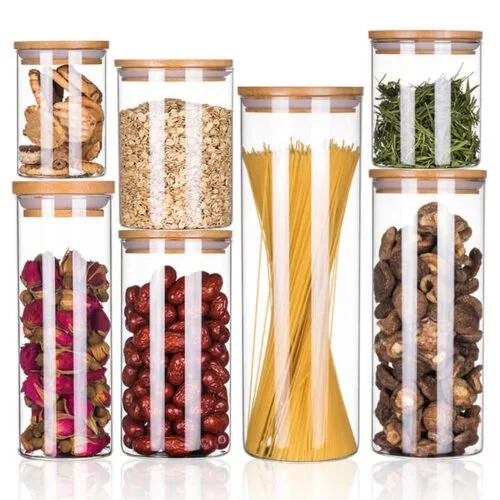
For businesses that need top quality, borosilicate glass is an excellent choice. Its superior strength against heat and chemicals provides real benefits. It protects product integrity, which is vital for food, drinks, and medicine. This material allows for processes like hot-filling or sterilization without the risk of the jar breaking. This reduces product waste and saves money. As a leading borosilicate glass jars manufacturer, we know that while it might cost a little more at first, its durability and reliability provide better long-term value. It ensures that the customer receives a safe, high-quality product every time.
How Jars Influence Shipping and Brand Perception
The material of a jar affects more than just its contents. Heavier materials like glass cost more to ship than lightweight plastics. This is a trade-off businesses must consider. However, the feel of the material has a big impact on how customers perceive a product. A heavy glass jar often feels more premium and trustworthy than a light plastic one. This is especially true for high-end products where the packaging is part of the experience. Luxury bottle shapes made from high-quality glass can make a product stand out. The durability of the packaging also matters more with online shopping, as packages are handled more. A strong jar ensures the product arrives safely.
Frequently Asked Questions (FAQs)
1. What is the strongest type of glass for a jar? Borosilicate glass is much stronger than regular soda-lime glass, especially against thermal shock (rapid temperature changes) and chemical corrosion.
2. Are plastic jars safe for hot foods? It depends on the type of plastic. Some are not safe for hot foods or microwave use. Borosilicate glass is a much safer and more reliable option for high-heat applications.
3. Which jar material is best for the environment? Glass and metal are excellent choices because they are endlessly recyclable without any loss in quality. However, the energy used to produce them initially is high, so recycling is very important.
4. Why do some products come in glass and others in plastic? The choice depends on many factors, including the product’s needs (e.g., light protection, heat resistance), shipping costs, and the brand’s image. Glass often signals premium quality, while plastic is chosen for its light weight and low cost.
Introduction to Agave-Inspired Tequila
Embark on a journey with us as we explore the unique realm of premium tequila – a world where the essence and character of the agave plant are encapsulated in each bottle. Every sip is a tribute to the rich cultural heritage that has been distilled into this fine spirit, telling a story that echoes through time and tradition.

Tequila is more than just a beverage; it’s an art form passed down through generations, where the bottle’s design is as significant as the tequila itself. The subtle nuances of the agave’s flavor are reflected not only in the taste but also in the intricate designs of the tequila bottles we curate for connoisseurs like you.
The History of Tequila Making
From humble beginnings in the volcanic soils of Mexico, the story of tequila is steeped in a history as rich and complex as the drink itself. It’s a tale of ancient practices, where the Aztec’s pulque laid the foundation for what would become one of the world’s most beloved spirits.
Key Events in the History of Tequila:
- 1000 B.C.: The earliest known production of agave-based beverages.
- 16th Century: The Spanish distillation techniques refine the process.
- 1758: José Antonio de Cuervo receives a land grant to grow agave.
- 1873: The first exports of tequila to the United States.
Understanding the historical context adds layers of appreciation when holding a bottle of agave tequila, a tradition that has stood the test of time.
The Agave Plant: Tequila’s Soul
The agave plant, native to the arid lands of Mexico, is the soul of tequila. Each type of agave, from the blue Weber to the lesser-known varieties like Espadin, contributes distinct flavor profiles that define various tequila classes – Blanco, Reposado, and Añejo.
Agave Varieties and Their Impact on Tequila:
- Blue Weber Agave: The primary agave used for tequila, known for its sweet and fruity notes.
- Espadin Agave: Commonly used in mezcal, it lends earthy and smoky tones.
Learn about the fascinating agave types and their flavors that make each tequila unique.
Artisanal Glassblowing Techniques
The enchanting process of glassblowing breathes life into the vessels that hold our prized tequilas. Artisanal glassblowing is an ancient craft, where each motion and breath fuses air, fire, and glass into stunningly beautiful tequila bottles.
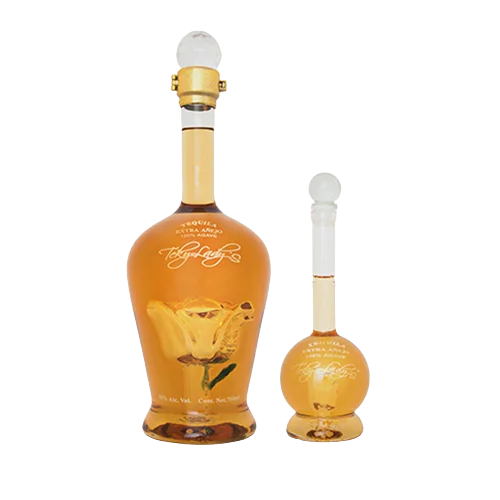
Captivating Bottles from our Collection:
- Skull Head Whiskey Bottle: A daring design that challenges the ordinary.
- Tequila Bottle with a Flower: A delicate piece that showcases the finesse of glass art.
The dedication to preserving these traditional glassblowing techniques ensures that every bottle is not just a container, but a work of art that pays homage to the spirit of the agave.
Selecting the Perfect Tequila Agave Bottle
When it comes to choosing the perfect tequila agave bottle, aesthetics and quality are paramount. The bottle’s design should resonate with the rich heritage of tequila and the individual style of the drinker.
Considerations for Selecting a Bottle:
- Design: Does the bottle’s aesthetic reflect the character of the tequila?
- Quality: Is the bottle crafted to preserve the tequila’s integrity?
Our selection of bottles ensures that each tequila is presented in a vessel worthy of its contents, a testament to a heritage of excellence.
Masterpieces in Glass
A tequila bottle can be so much more than a container; it can be a conveyor of culture, an expression of art. We celebrate the intersection of form and function with our collection of glass artistic tequila bottles.

Highlighting Artful Designs:
- Tequila Bottle with Dragon: A symbol of power and mystique.
- Skull Head Whiskey Bottle: Bold and unapologetic, a statement piece.
These bottles represent stories – narratives woven into the very glass that invite conversation and admiration.
Let us continue diving deep into the world of tequila through the lens of the agave bottle experience. The subsequent sections will guide you through the depths of production, the artisanal crafting process, the art of tasting, and the future visions for this cherished spirit.
The Production Process Unveiled
The soul of tequila is crafted long before it reaches the bottle—it begins with the meticulous selection and harvesting of the agave plant. The journey continues through the processes of cooking, fermenting, and distilling, which are carried out with an unwavering commitment to quality and tradition. Our glimpse behind the scenes reveals a world where precision and passion coalesce.
Stages of Tequila Production:
- Harvesting: Agave hearts, or piñas, are hand-selected for maturity.
- Cooking: A slow steam-cooking process converts agave starches into sugars.
- Fermentation: Natural yeasts or cultivated strains initiate the conversion of sugars into alcohol.
This process not only yields a spirit of exceptional quality but also one that is deeply connected to its roots in the earth and culture.
Taste the Difference: Premium Tequila Selection
In our pursuit to offer an exquisite tequila experience, we’ve curated a selection of premium tequilas. Each one reflects the nuanced flavors that only a hundred percent agave tequila can offer. Our premium tequilas are tailored to satisfy the palates of those who seek a sip of luxury.
Tasting Notes of Premium Tequilas:
- Smooth texture with a balance of sweetness and spice.
- A complex finish that lingers, inviting contemplation and savor.
We believe that the right tequila can elevate any occasion into a memorable one, and our bottles are the portals through which these moments are reached.
Tequila Bottle Sizes and Their Significance
The choice of tequila bottle size is both practical and aesthetic, serving diverse needs from individually enjoying tequila to sharing with a gathering of friends. Ranging from quaint shots to impressive showpieces, our guide to tequila bottle sizes demystifies the options available to enthusiasts.
Types of Bottle Sizes:
- Shot size: Perfect for tastings and samplings.
- Standard size: Ideal for personal use or as a gift.
- Large format: Makes a statement in gatherings and collections.
Selecting the right size is as crucial as the spirit inside, catering to the occasion and the drinker’s intent.
Crafting the Perfect Tequila Cocktail
Tequila is a versatile spirit, forming the backbone of classic cocktails and inspiring new creations. The art of crafting the perfect tequila cocktail goes beyond following a recipe—it’s an alchemy of balancing flavors to enhance the tequila’s profile.

Cocktail Recipes to Try:
- Tequila Sunrise: A vibrant blend of tequila, orange juice, and grenadine.
- Classic Margarita: The quintessential mix of tequila, lime, and triple sec.
Whether shaken or stirred, these cocktails represent the endless possibilities that tequila offers to the creative bartender and home enthusiast alike.
Sustainable Practices in Tequila Production
Sustainability is not just a buzzword; it is a vital practice within the tequila industry. As stewards of the land, producers are embracing environmentally-friendly methods to ensure the longevity of the agave plant and the communities that depend on it. From water conservation to waste reduction, the tequila industry is engaged in an ongoing effort to preserve the natural balance.
Efforts Toward Sustainability:
- Agave reforestation: Ensuring a continuous, healthy supply of agave.
- Recycling waste: Transforming production byproducts into compost or energy.
Embracing these practices not only supports the ecosystem but also honors the ancient traditions that have always been in harmony with nature.
The Aroma and Flavor Profile of Agave Tequila
When it comes to agave tequila, each sip tells a story of terroir, technique, and time. The aroma and flavor profile of tequila is as complex as it is captivating, drawing from the very core of the agave plant. Notes of pepper, citrus, and honey are just the beginning of this sensorial journey.
Key Aromas and Flavors:
- Pepper: A spicy signature of many classic tequilas.
- Citrus: Bright notes that add freshness and zest.
With every glass, agave tequila offers a nuanced experience that can be endlessly explored and enjoyed.
Collectible Tequila Bottles: Beyond Consuming
For many, the allure of tequila extends beyond the spirit itself to the bottles that cradle it. Collectible tequila bottles offer a tangible connection to history, craftsmanship, and the artistry that defines this liquid treasure. These bottles represent investments in both culture and aesthetics and make for impressive displays that enrapture and inspire.
Traits of a Coveted Tequila Bottle:
- Unique design: Stand-out aesthetic features that captivate the eye.
- Historical significance: Bottles that tell a rich story of their origins and creators.
Whether displayed on a mantle or as part of a dedicated collection, these bottles are treasured artifacts to be admired for generations.
The Cultural Significance of Tequila
Tequila is more than just Mexico’s national drink—it’s an emblem of cultural identity. Its cultural significance permeates through festivities, rituals, and daily life. Each pour is a celebration of the vibrant Mexican spirit, bringing people together in moments of joy, reflection, and kinship.
Cultural Roles of Tequila:
- Festive occasions: A staple in celebrations and national holidays.
- Personal milestones: Marking life’s significant events with a toast.
This deep cultural lineage enhances the appeal of tequila, making it a beloved beverage revered around the world.
Infusing Tradition with Innovation: Modern Agave Bottles
As we pay homage to the ancestral roots of tequila, we also embrace the spirit of innovation. Striking a balance between respecting traditional methods and pioneering new techniques, modern agave bottles combine the old with the new. These bottles resonate with today’s discerning drinkers, offering them a connection to the past while standing at the forefront of design and sustainability.
Innovative Bottle Technologies:
- UV-protective glass: To preserve the quality of the tequila.
- Eco-friendly materials: Minimizing the environmental impact of production.
By weaving innovation into every bottle, we ensure that our tequila remains timeless, relevant, and true to its origins.
Tequila Tasting: A Step-by-Step Guide
To truly appreciate tequila, one must engage in the ritual of tasting with an attentive mind and palate. Our step-by-step tequila tasting guide leads enthusiasts through the process of identifying the characteristics that make each tequila distinct. By sipping mindfully, one can fully embrace the complexities and delicate balance of flavors that premium tequila offers.
The Art of Tequila Tasting:
- Observation: Note the color and body of the tequila.
- Aroma: Inhale the bouquet of scents released by the spirit.
- Savoring: Let the tequila settle on the palate and identify the different flavor notes.
Guiding through the sensory landscape of tequila gives one a deeper appreciation and understanding of this artisanal spirit.
The Legal Requirements of Authentic Tequila Bottling
The authenticity of tequila is protected by stringent regulations that ensure each bottle meets the highest standard set forth by the Mexican government. These legal requirements safeguard the tequila designation of origin, a distinction reserved for spirits produced in specific regions of Mexico using traditional methods.
Essential Legal Standards for Tequila:
- 100% agave labeling: Confirming the pure use of agave.
- Appellation of origin: Guaranteeing the geographical integrity of production.
Consumers can trust that tequila certified under these regulations delivers an authentic experience rooted in heritage and protected by law.
Pairing Food with Tequila: A Culinary Adventure
Pairing food with tequila is a delicious journey through flavors, where the robust and varied notes of the spirit are matched with culinary creations. The right pairing can elevate a meal, turning it into an unforgettable gastronomic adventure that enhances both the dish and the drink.
Innovative Tequila and Food Combinations:
- Blanco Tequila and Ceviche: The spirit’s crispness accents the dish’s acidity and fresh flavors.
- Añejo Tequila and Chocolate: The aged tequila’s complexity marries well with the rich, dark chocolate.
Discovering the perfect food pairings opens up a new dimension of enjoyment, transforming the way we experience tequila at the table.
The Investment Potential of Rare Tequila Bottles
As tequila’s popularity continues to soar, so does the interest in investing in rare and limited-edition bottles. These collectibles offer the dual satisfaction of owning a piece of liquid art and the possibility of appreciating value over time.
Factors Influencing the Value of Collectible Tequila:
- Scarcity: Limited releases and special editions are highly sought after.
- Provenance: A well-documented history adds to a bottle’s allure.
Investing in tequila bottles is not just a pursuit for the spirit enthusiast; it’s a strategic move for those looking to diversify their investment portfolios with tangible assets.
The Health Aspects of Agave Spirits
While tequila is often celebrated for its flavor and cultural significance, it is also important to acknowledge its health aspects. In moderation, agave spirits can be a part of a balanced lifestyle, with potential benefits derived from the natural components of the agave plant.
General Health Considerations:
- Moderation: Responsible consumption is key to enjoying tequila healthily.
- Natural sugars: The fructans in agave may have a lower glycemic index than other sugars.
Understanding these aspects allows us to enjoy tequila thoughtfully and responsibly, as part of a holistic approach to health and well-being.
Iconic Tequila Bottles and Their Stories
Iconic tequila bottles are vessels of stories, capturing moments in history and the essence of the tequila-making tradition. These bottles are as much a part of the spirit’s narrative as the liquid they hold.
Memorable Stories from Iconic Bottles:
- Historic brands: The tales of the original tequila families and their legacies.
- Designer collaborations: When artistry and tequila production meet, spawning limited edition bottles.
Recognizing the stories behind each bottle enriches the experience of every pour, connecting drinkers to the vibrant history and craft of tequila making.
Conclusion: The Future of Tequila Agave Bottles
Looking ahead, we anticipate a bright and innovative future for tequila and its presentation. As new technologies emerge and global appreciation for this fine spirit grows, we can expect continued evolution in both the contents and packaging of agave tequila bottles. The embrace of heritage and innovation will undoubtedly lead to new classics that will enchant future generations, just as they have enchanted us today.
Future Trends in Tequila and Bottle Design:
- Sustainability: A growing focus on eco-friendly materials and production methods.
- Personalization: Custom-designed bottles that cater to personal tastes and styles.
In every sip, in every intricately designed bottle, lies the promise of both tradition and transformation—a journey of taste, culture, and the art of living well.
This comprehensive article has endeavored to cover the multifaceted world of tequila through the lens of the agave bottle, providing insights into its rich history, cultural importance, and future prospects. We hope you have found this voyage through the essence of tequila both enlightening and enjoyable.
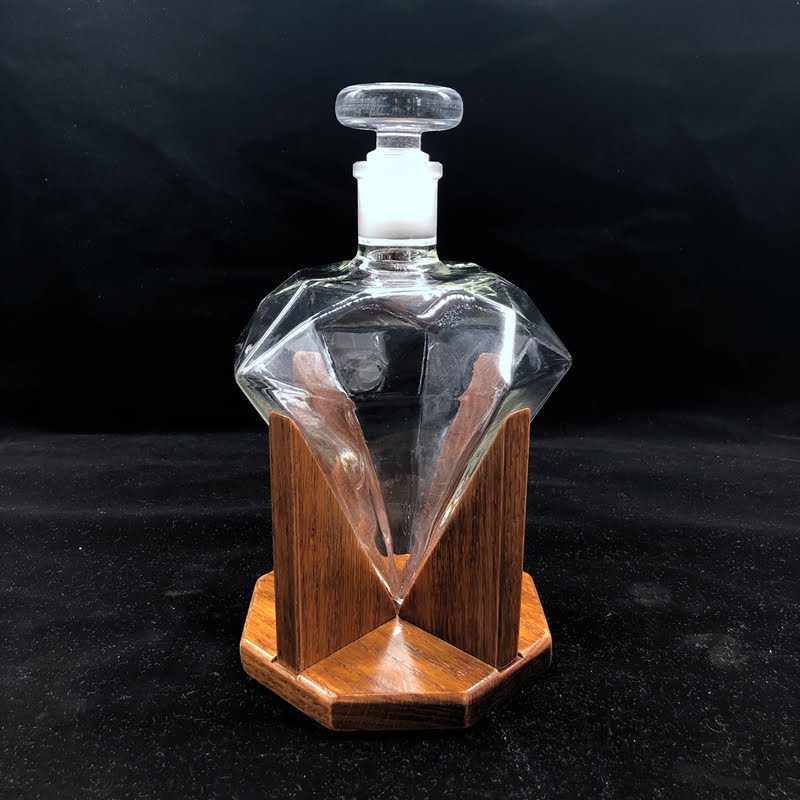
Borosilicate glass bottles are famed for their exceptional durability, heat resistance, and scratch resistance. This glass is unique, created by combining silica and boron oxide, producing a material that can withstand thermal shock. As a result, borosilicate glass bottles are ideal for use across various applications, including scientific experiments, food and beverage storage, and personal care products.
The history of borosilicate glass dates back to the late 1800s when the German glassmaker, Otto Schott, invented the first borosilicate glass. Since then, it has been utilized in numerous industries, including pharmaceuticals, chemicals, and the food and beverage sector.
One of the most significant advantages of using borosilicate glass bottles is their non-reactive nature. Unlike other materials, they do not interact with the container’s contents, preserving the stored items’ taste and quality. Moreover, they are incredibly sturdy and long lasting, making them a cost-effective choice for consumers and businesses.
So, whether you’re storing your favorite drink or conducting a science experiment, borosilicate glass bottles are the ultimate container choice, capable of withstanding even the toughest conditions.
Borosilicate glass bottles offer a range of impressive advantages, making them a popular choice across various industries.
There are some of the most significant benefits:
Heat resistance:
Borosilicate glass bottles can withstand high temperatures of up to 600°C, making them ideal for storing hot beverages like coffee, tea, and soups. They are also suitable for use in scientific experiments that require extreme heat.
Scratch resistance:
Borosilicate glass bottles are highly scratch-resistant, maintaining their clarity and transparency over time. This is an essential feature for businesses that want to present their products professionally and attractively.
Chemical inertness:
Borosilicate glass is non-reactive, which means it doesn’t interact with the bottle’s contents. This is vital for storing and transporting chemicals and other sensitive materials safely.
Durability:
Compared to other types of glass bottles, borosilicate glass bottles are much more durable and longer lasting. This makes them a cost-effective choice in the long run and safer for use in labs and other challenging environments.
Environmentally friendly:
Borosilicate glass is a sustainable material that can be recycled and reused, making it an environmentally friendly choice. Additionally, borosilicate glass bottles are often used as a replacement for single-use plastic bottles, helping to reduce plastic waste and promote sustainability.
In conclusion, borosilicate glass bottles are versatile, durable, and eco-friendly for various applications. Whether you’re looking for a container for your coffee or a safe way to transport chemicals, borosilicate glass bottles have you covered.
Borosilicate glass bottles are versatile and widely used in various industries.
Here are some of the most common uses of borosilicate glass bottles:
Food and beverage storage:
Borosilicate glass bottles are popular for storing food and beverages like sauces, juices, oils, and dressings. Both home cooks and businesses prefer them as they do not leach harmful chemicals and preserve the taste of the food or drink.
Laboratory and scientific experiments:
Borosilicate glass bottles are a staple in labs and scientific experiments as they resist thermal shock, chemical corrosion, and breakage. They are used to store and transport chemicals, reagents, and solvents safely.
Cosmetics and personal care products:
Borosilicate glass bottles are an eco-friendly and sustainable choice for storing cosmetic and personal care products like perfumes, lotions, and oils. They are a popular option among consumers who want to reduce plastic consumption.
Apart from these uses, borosilicate glass bottles are also ideal for storing and transporting pharmaceuticals, oils, lubricants, and other products requiring a durable, safe, and reliable container.
When it comes to glass bottles, there are several options available.
Let’s compare borosilicate glass bottles to other common types of glass bottles:
Soda glass:
This is the most common type of glass used to manufacture glass bottles. It is less expensive than borosilicate glass but less resistant to thermal shock and chemical corrosion. As a result, it is not as durable and long-lasting as borosilicate glass.
Tempered glass:
This type of glass is treated with heat or chemicals to make it stronger and more resistant to breakage. While stronger than soda-lime glass, it is still not as heat-resistant or chemically inert as borosilicate glass.
Fused silica glass:
This type of glass is made from pure silica, which makes it highly resistant to chemical corrosion and thermal shock. However, manufacturing is also more expensive and challenging than borosilicate glass.
Borosilicate glass bottles are the superior choice for businesses and consumers who require a durable, heat-resistant, and chemically inert container for their products. They are a cost-effective, reliable option that can withstand various applications and are environmentally friendly due to their recyclability.
Choosing the right borosilicate glass bottle can be critical for businesses and consumers.
Here are some factors to consider when selecting the perfect borosilicate glass bottle:
Size and shape:
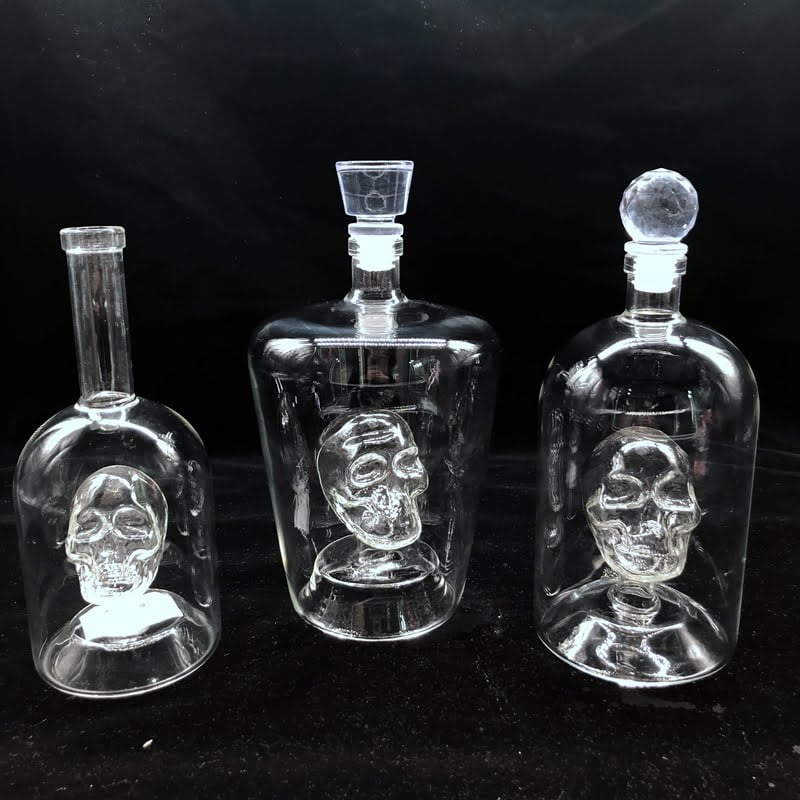
Borosilicate glass bottles come in various sizes and shapes, so choosing one that suits your specific needs is crucial. Consider the volume of the product you will store and the available space.
Cap and closure options:
Borosilicate glass bottles can be fitted with different caps and closures, such as screw caps, snap-on caps, and dropper caps. Consider the type of product you will be storing and the convenience of the selected cap or closure.
Brand and manufacturer reputation:
Choose a reputable brand and manufacturer for your borosilicate glass bottle to ensure the quality and durability of the product. Look for reviews and testimonials from other customers to understand the product’s reliability.
Price and availability:
Borosilicate glass bottles are generally more expensive than soda-lime glass bottles but are more durable and long-lasting. Consider the price and availability of the bottles when choosing a supplier.
Apart from these factors, consider the intended use of the bottle, as well as any specific requirements for storage and transportation. Considering these factors, you can choose the right borosilicate glass bottle that meets your needs and requirements.
Taking care of borosilicate glass bottles is essential to ensure their longevity and safety.
Here are some tips for maintaining borosilicate glass bottles:
Cleaning and sanitizing:
Borosilicate glass bottles can be cleaned with warm water and soap. For thorough cleaning, use vinegar and water or baking soda and water. To sanitize the bottle, soak it in water and bleach.
Handling and storing:
Handle and store borosilicate glass bottles carefully to prevent breakage. Avoid stacking heavy objects on the bottles and use protective packaging when transporting them.
Avoiding thermal shock:
Although borosilicate glass bottles are highly resistant, they can break if exposed to extreme temperature changes. Gradually warm up or cool down the bottle to avoid thermal shock.
Proper care and maintenance of borosilicate glass bottles can help extend their lifespan and ensure their durability and safety.
Thank you for reading our post on “What You Need to Know About Borosilicate Glass Bottles.” We hope you found this information helpful and informative.
| Key takeaway | What it means for AK-47 whiskey bottle collectors | Quick action |
|---|---|---|
| This is a niche collectible | Most buyers want shelf impact, gifts, and bar display | Collect for looks first, not resale |
| Borosilicate can be a better pick | It supports clarity, durability, and heat-change resistance | Ask for material proof and lead-free tests |
| Fakes and weak copies exist | Thin walls and soft mold detail kill value | Check thickness, seams, and closure fit |
| Pouring problems are common | Long shapes can drip, glug, or trap air | Do a water pour test before display |
| Packaging decides breakage | Rifle shapes need full-length support | Demand strong dividers and drop tests |
| Risk is higher than skull/animal shapes | Weapon-like visuals can trigger complaints or platform limits | Use safer finishes and clear branding |
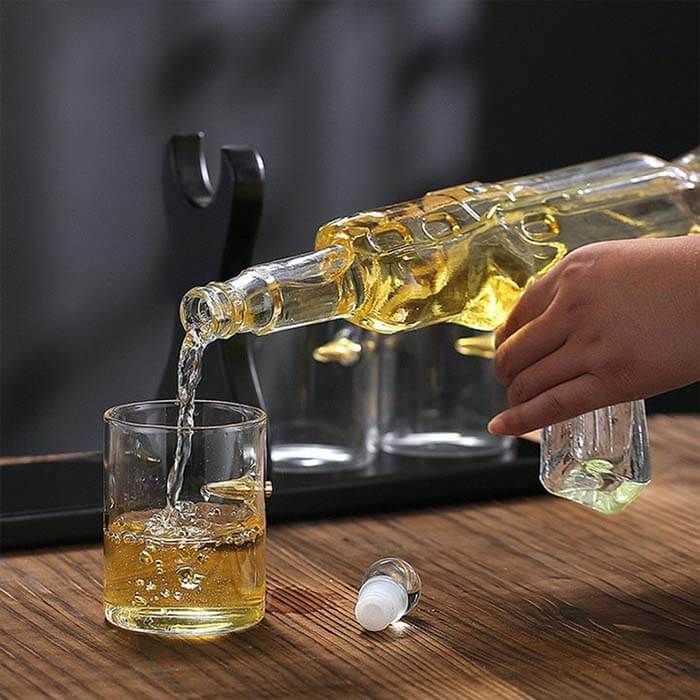
AK-47 Whiskey Bottle Collectors: Tips and Tricks (2026)
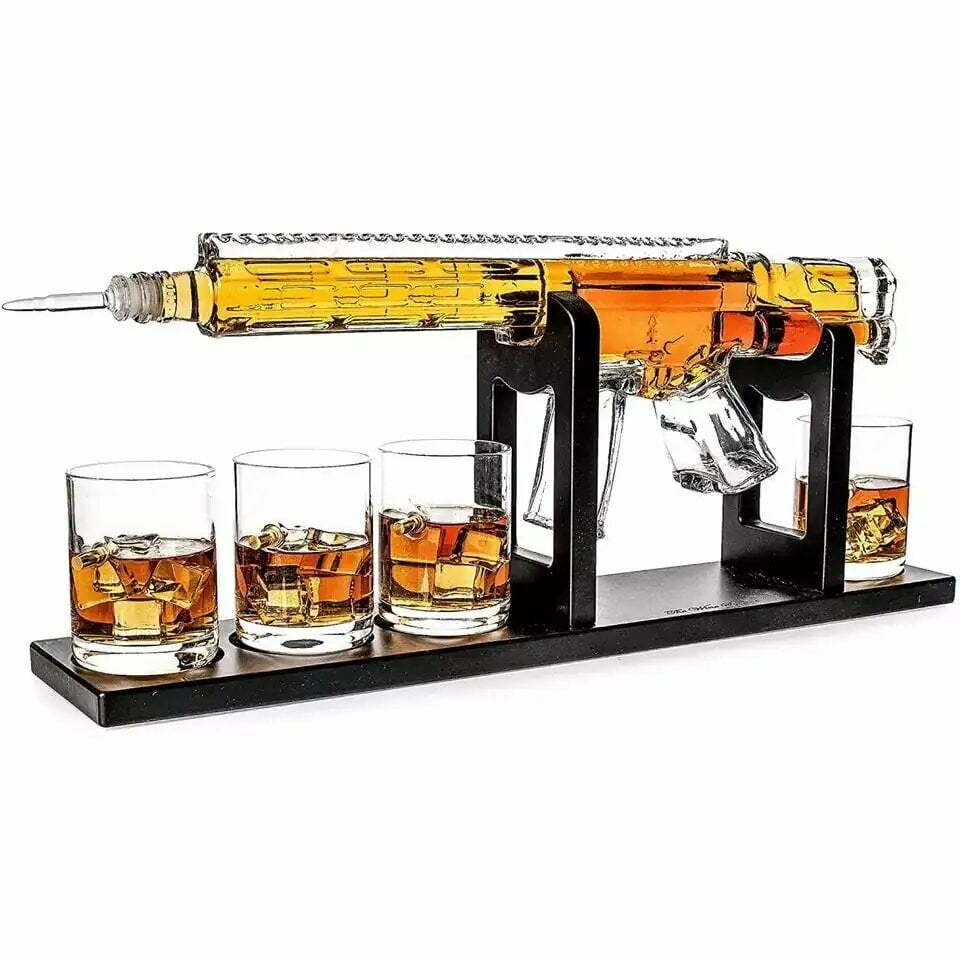
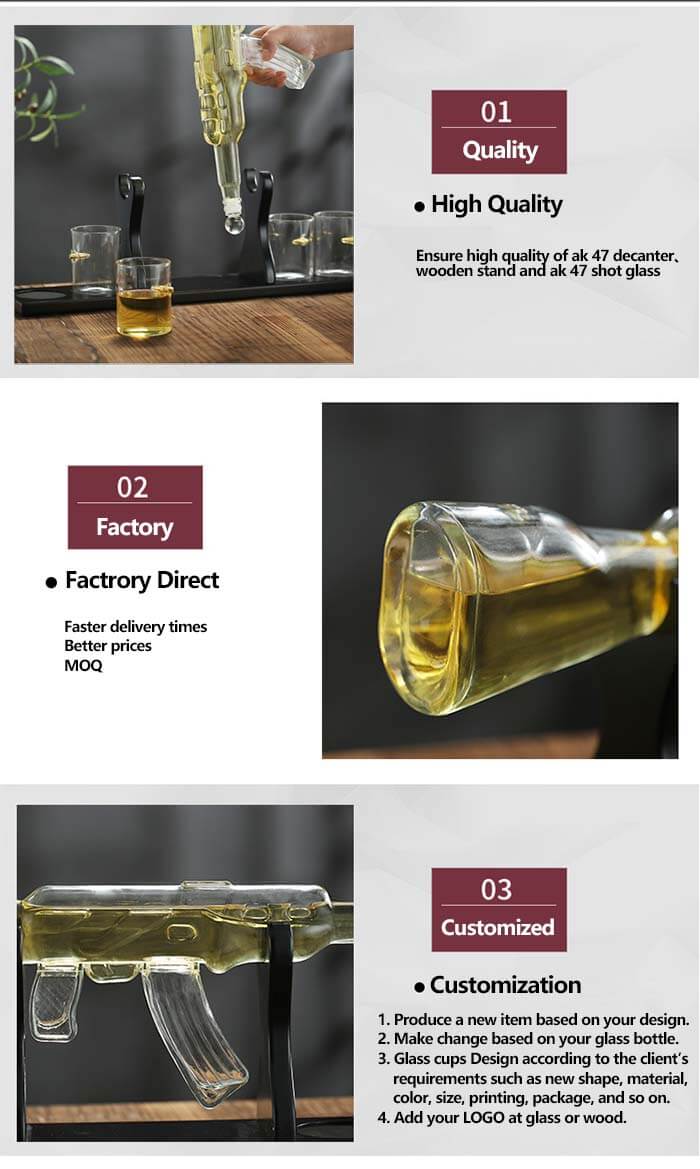
AK-47 shaped whiskey bottles sit in a small corner of the decanter world. People buy them for display, gifts, and themed bars. Many collectors keep them sealed or refill them with better spirits. That behavior matters. It means the glass and build quality often matter more than the original liquid.
A good 2026 collection starts with two goals: clean design and safe ownership. Clean design means sharp detail, clear glass, and a stable base. Safe ownership means smart storage, strong packaging, and low-leak closures.
Start your research with a real product range. The fastest reference point is the AK-47 whiskey decanter collection. If you also collect tequila-themed rifle shapes, compare style and positioning with a unique tequila decanter in AK-47 design.
Know what you collect: bottle, decanter, or display piece
Some AK-47 items are true decanters. They seal well. They pour well. They can handle regular use. Others are “one-time bottles” that look good but leak, drip, or feel thin. A collector should label each piece in the cabinet as one of three types: use, display, or gift.
A “use” decanter needs a reliable neck finish and a stable base. A “display” piece can be less perfect, but it still must avoid sharp seams and weak corners. A “gift” set should include a stand and a strong box so the buyer feels value fast.
If you want a functional baseline, review what a whiskey decanter is used for. For themed retail sets, the barware gift set for resale page helps you think like a buyer, not only a collector.

Use the right material: borosilicate vs soda-lime
Material choice changes how the bottle looks after months on a shelf. It also changes how it handles small shocks and temperature change. Many novelty bottles use soda-lime glass because it is common and cost-friendly. Borosilicate glass can be a better choice when you want clean clarity and strong performance.
Collectors can use simple checks. Ask the seller to state the glass type in writing. Ask for lead-free proof if the piece touches liquid. Check if thin areas feel “hollow” or weak when you tap lightly. A good piece feels consistent from base to barrel.
If you need a straight comparison, use borosilicate vs soda-lime glass and confirm health standards with safety benefits of lead-free borosilicate glass. For storage stability, the guide on heat and chemical resistance for alcohol storage helps you set realistic expectations.
Spot fakes fast with mold and glass checks
AK-47 shapes attract copies because the design sells on sight. Many copies look fine in photos and fail in hand. The most common issues are soft details, uneven thickness, rough seams, and sloppy neck finishes. These problems reduce both value and safety.
Use a short authenticity checklist:
- Mold detail stays sharp on grip texture and edges
- Seams look clean with no raised “knife lines”
- Walls feel even in long areas like the barrel and stock
- Neck finish looks smooth so the cap can seal
For buyers who source in volume, prototype control matters even more. A photo sample can hide defects. A production sample tells the truth. Learn the process with glass bottle molds and prototypes and the deeper look at glass bottle mold craftsmanship.
Pouring and sealing tests that prevent mess
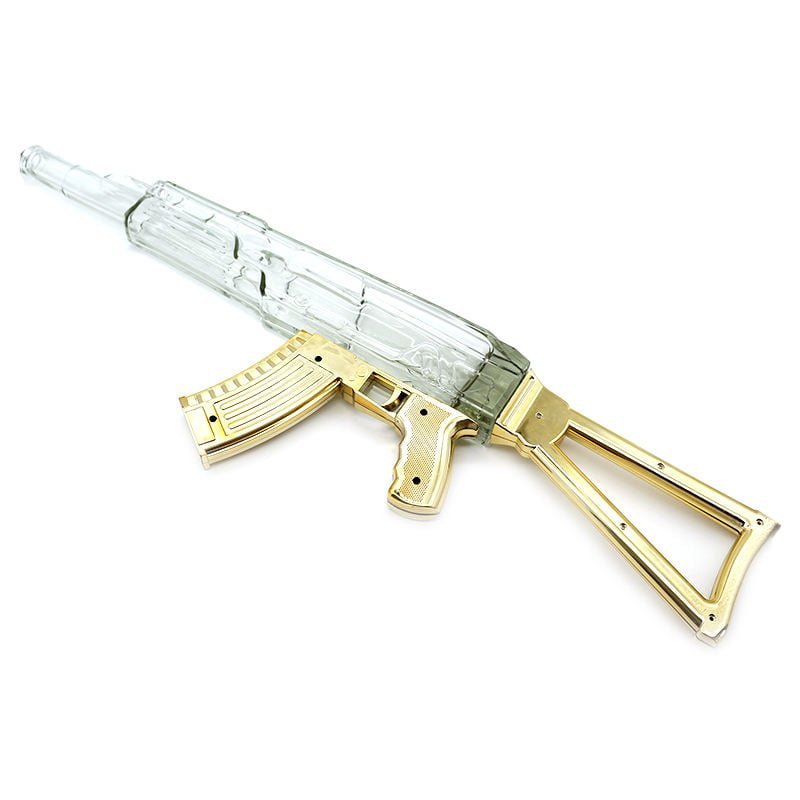
Rifle shapes create awkward liquid flow. Long channels can trap air. Wide openings can “glug” and splash. Some designs drip because the lip angle is wrong. Collectors can solve most surprises with a basic test routine before the bottle hits the main shelf.
Do these quick tests:
- Fill with water and pour slow to check drips
- Tilt and hold for 10 seconds to spot seepage
- Cap and shake lightly to check seal strength
- Stand it overnight on a towel and look for leaks
Closure choice is a big deal for long shapes. Cork can look classic but fit can vary. Screw caps can seal better but need a clean thread. Use a guide to custom lid types to understand trade-offs. If you also care about the “premium look,” align decoration and closure with borosilicate decanter branding options.
Display and storage rules that protect glass and liquor
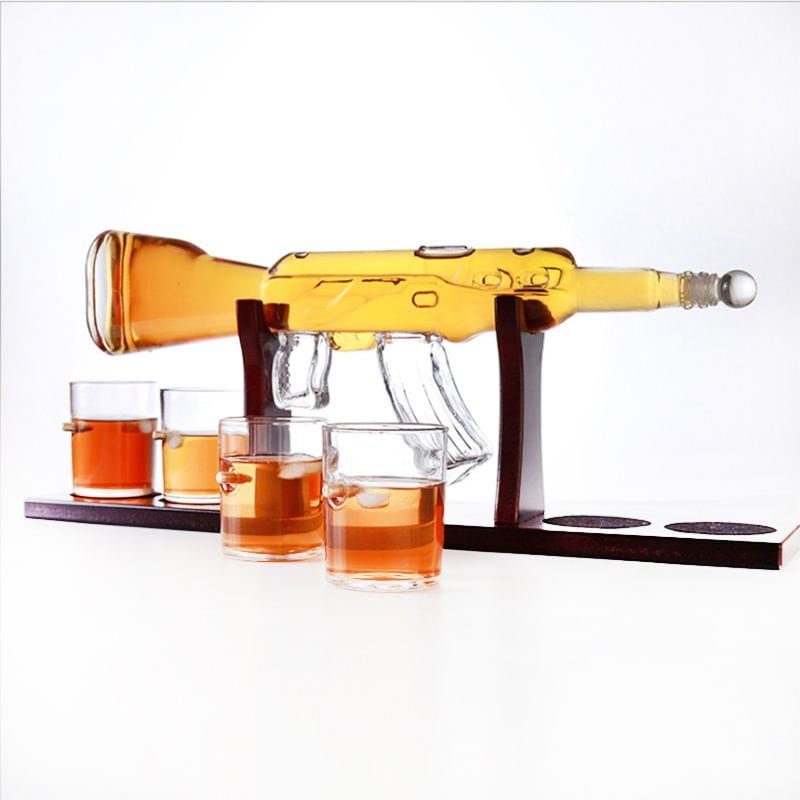
Collectors often lose bottles to simple shelf problems. The shape is long. The center of gravity can sit far from the base. A small bump can tip the piece and chip the barrel or stock. A stand or cradle reduces that risk fast.
Use these storage rules:
- Keep the bottle on a stable shelf with a flat surface
- Use a stand for long shapes when possible
- Avoid direct sun that can fade coatings and labels
- Keep distance from heat sources and busy walk paths
If liquid stays inside, treat it like any spirit. Stable temperature helps flavor. Tight seals reduce evaporation. For function-first thinking, use whiskey decanter purpose as a reference. For display bundles and themed sets, the barware gift set for resale page helps you judge what looks “complete” on a shelf.
Clean and deodorize without scratching the surface
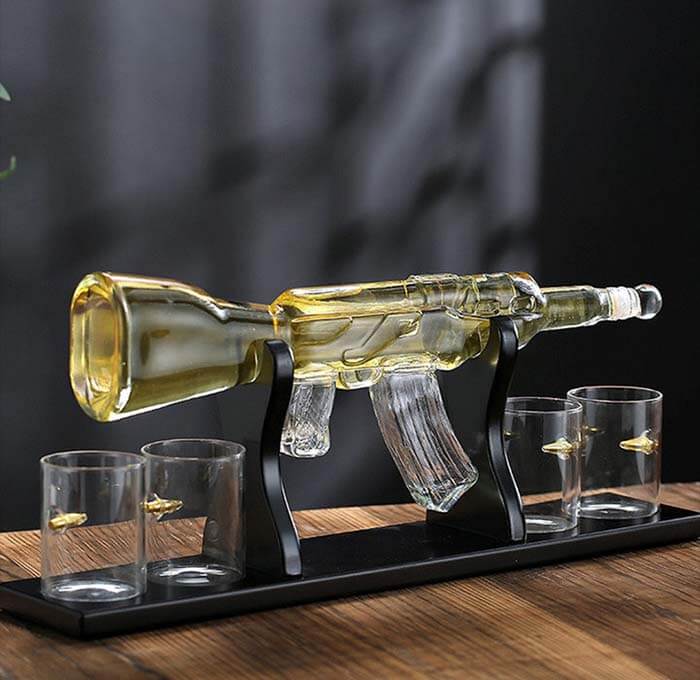
Many collectors keep the bottle after use. Cleaning matters because old alcohol, sugar, or flavor oils can leave a film. That film dulls clarity and can smell bad. Harsh scrubbing can scratch glass and ruin the look.
Use a safe cleaning routine:
- Rinse with warm water first
- Use mild soap and a soft brush
- Rinse twice and air dry fully
- Avoid metal tools and abrasive pads
If you need deep cleaning, use proven glass-safe methods. A careful approach reduces haze and odor. The guide on sterilizing glass bottles helps with safe steps and timing. For material behavior and long-term display clarity, review long-term clarity and optical advantage and the basics of material safety for food-grade containers.
Packaging and shipping that stops chips and cracks
Rifle shapes break in predictable places: thin edges, long barrel sections, and neck zones. Weak cartons turn a cool collectible into refunds and bad reviews. Good packaging supports the full length and locks the neck in place.
Ask for these packaging features:
- Full-length foam or molded tray support
- Thick dividers that stop side impacts
- Double-wall export cartons for long-distance shipping
- Drop testing with real packed samples
Timing also matters. Busy sourcing seasons can lead to rushed packing. Plan early so the factory has time to do packaging right. Use best time to source decanters in China and check real execution steps in the step-by-step OEM onboarding guide. If you visit a supplier, the China glass factory visit guide helps you verify packing lines in person.
China sourcing basics: MOQs, molds, and timelines
A rifle-shaped decanter looks complex, but the sourcing logic is simple. Your main costs come from mold work, reject rate, decoration, and packaging. Your main risk comes from slow sales. That is why many buyers start with a small test run using an existing shape, then move to a custom mold after repeat orders.
Key sourcing tips:
- Lock capacity, weight, and finish specs early
- Confirm mold ownership in writing for custom work
- Ask for production samples, not only photo samples
- Set a clear QC standard for seams and thickness
If you want supplier direction, start with China borosilicate decanter suppliers and plan the full process using OEM/ODM decanter design to production. For shape flexibility, compare options in custom shapes whisky decanters.
Supplier vetting: capacity, QC, and region choice
A factory can make round bottles and still fail on rifle shapes. Long novelty designs need stable thickness control and consistent mold care. A good supplier shows process control with real records, not only nice photos.
Ask for proof:
- Production videos of similar long-shape items
- Thickness tolerance targets and reject targets
- Packing photos of export cartons and inner trays
- Third-party inspection support if needed
Region also matters. Different areas can have different lead times, cost structures, and supply chains. Use how to vet supplier production capabilities as your baseline. For region comparison, check Hebei vs Guangdong borosilicate suppliers and the broader map in top glass manufacturing regions in China.
Branding and decoration that looks premium
Decoration can lift perceived value fast, but it can also raise complaints if it feels too weapon-like. Many buyers prefer clean, gift-friendly styling. Clear glass and simple accents often work better than heavy graphics on an AK shape.
Good decoration choices:
- Screen print for clean logos and marks
- Hot stamping for small premium accents
- Tinted glass for quick shelf impact
- Clean boxes that say “barware” and “gift”
Color and branding should match your target. A bar gift SKU can use bright cues. A home bar SKU can use simple black-and-gold accents without “real weapon” styling. For planning color and finish, use glass colors and whisky shelf appeal and broader positioning tips from personalized glass bottles.
Risk check: regulations, platforms, and travel friction
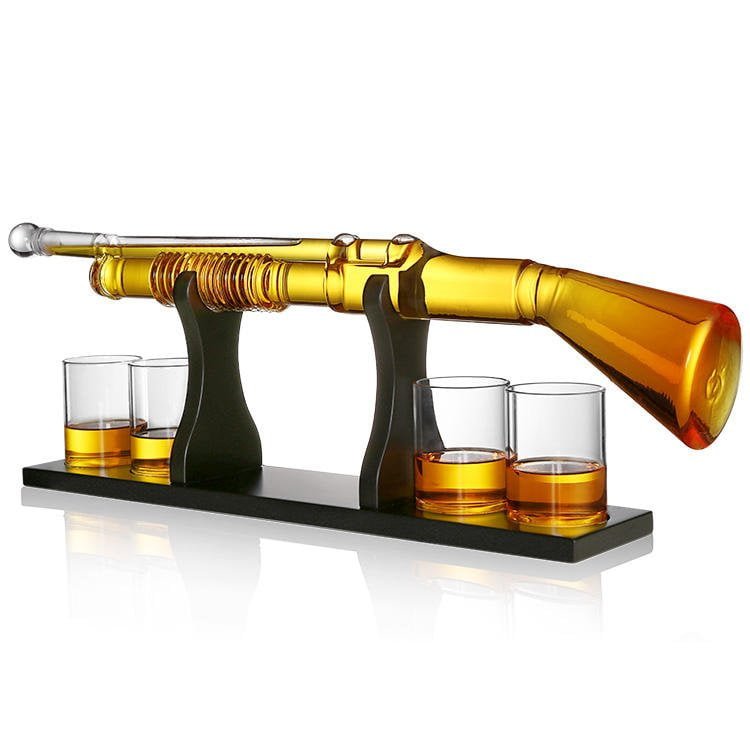
Gun-themed designs can face more friction than skull, animal, or ship shapes. Some platforms limit weapon-like visuals. Some markets have stricter rules on how products look in ads. Travel can also create trouble. Security staff can treat realistic shapes as suspicious, even when empty.
Collectors and buyers can reduce risk with design choices:
- Avoid matte-black “real weapon” finishes
- Add clear branding so it reads like barware
- Keep marketing away from youth themes
- Avoid protected firearm model names and marks
If you want novelty with fewer headaches, compare alternative shapes and safer themes. Use the different shapes of glass bottles for a broad view and the novelty positioning guide on tequila bottle guns and novelty for practical framing. A mixed catalog often sells better than a single gun-only lineup.
Frequently Asked Questions (FAQ)
Are AK-47 whiskey bottles a smart “investment collectible” in 2026? They work best as display collectibles and gifts. Most demand is impulse-driven, not scarcity-driven. Build the collection for shelf impact. Start product research with the AK-47 whiskey decanter category.
How can I tell if a rifle decanter is borosilicate glass? Ask for written material specs and lead-free compliance. Good borosilicate pieces often show stable clarity and consistent thickness. Use what is a borosilicate glass bottle for basic checks.
What defects show up most on AK-shaped glass bottles? Common issues include thin barrel walls, rough seams, stress lines near sharp edges, and poor neck finish fit. Mold knowledge helps you spot weak copies fast. See glass bottle molds and prototypes.
What should I test before I display a filled decanter? Do a water pour test, check for drips, and confirm the cap seals overnight. Closure choice drives leak risk. This guide helps: custom lid types for bottles.
How do I reduce breakage when shipping rifle-shaped bottles? Demand full-length foam support, strong dividers, and drop-tested cartons. Use a clear onboarding process like the step-by-step OEM onboarding guide.
What novelty shapes pair well with AK-47 designs for wider sales? Skulls, dragons, globes, ships, and agave-themed bottles often face less friction and reach more buyers. Start exploring shape options with custom shapes whisky decanters and broader tequila bottle designs.
