Buyer Guides By Topic.
Browse the buyer guides available in this topic.
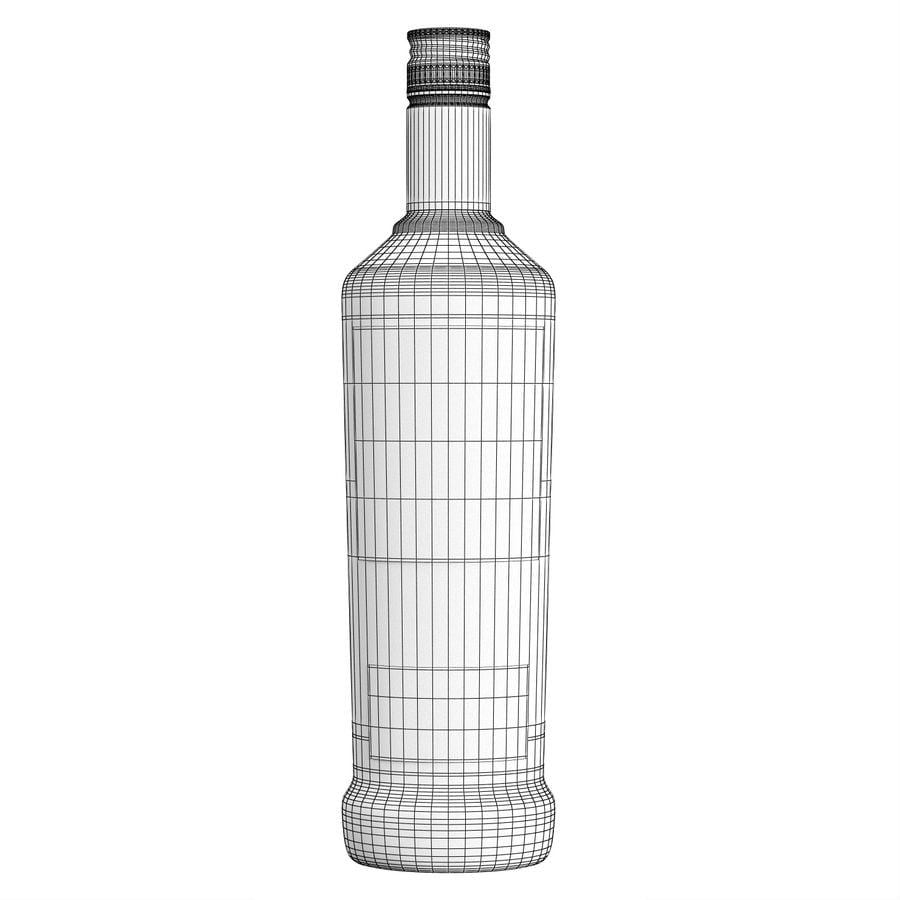
Glass bottles are popular with manufacturers and consumers due to their unique aesthetic appeal, durability, and recyclability. However, designing a new and innovative glass bottle can be challenging. That’s where glass bottle molds and prototypes come in as essential tools in the design process.
The Importance of Glass Bottle Molds and Prototypes
Glass bottle molds are used to shape molten glass into specific designs. Prototypes, on the other hand, are created to test the design and functionality of the bottle before it goes into production. These tools allow designers to create intricate and unique bottle designs that may not have been possible with traditional manufacturing methods.
Cost-Effective Design Process
Using glass bottle molds and prototypes in the design process is also cost-effective. Designers and businesses can experiment with designs and ideas without committing to a production mold. Prototypes help identify design flaws or issues that must be addressed before producing the bottle.
Designing Glass Bottles: From Concept to Creation
The glass bottle design process usually begins with a concept or idea. From there, a designer creates a sketch or drawing of the design. Once the design is finalized, a glass bottle mold or prototype is created to bring the design to life.
Creating Glass Bottle Molds and Prototypes
Creating a glass bottle mold starts with converting the design into a 3D computer-aided (CAD) model. This model is then used to create the mold using 3D printing. Once the mold is created, it shapes the molten glass into the desired bottle design. Prototypes are created using a similar process, where the CAD model is used to create a 3D-printed model of the bottle design, which is then used to test the functionality and design of the bottle.
Unique Designs for Standing Out in the Market
Custom glass bottle molds and prototypes allow designers to create unique, personalized bottle designs. These unique designs can help businesses stand out in a crowded market and attract new customers. With advancing technology, we can expect to see more advanced glass bottle molds and prototypes used in the industry, allowing even greater design freedom and functionality in glass bottle design.
Environmental Benefits of Glass Bottle Molds and Prototypes
Glass bottle molds and prototypes are made from materials that can be recycled, making them more environmentally friendly than other manufacturing methods. They can also be reused multiple times, further reducing their environmental impact.
Other Uses for Glass Bottle Molds and Prototypes
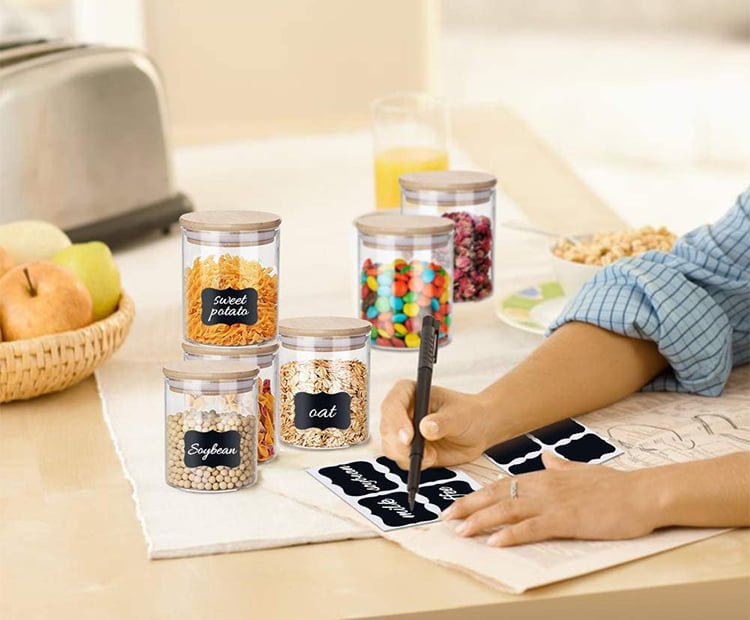
Glass bottle molds and prototypes can also be used to create other types of glassware, such as jars and vases. However, the molds and prototypes must be designed specifically for those products.
Conclusion
Glass bottle molds and prototypes are essential tools in the design process for creating unique and innovative glass bottles. They allow designers to experiment with designs and ideas without committing to a production mold, identify design flaws or issues before production, and create unique, personalized designs that stand out in a crowded market. With their environmental benefits and the ability to create other types of glassware, glass bottle molds, and prototypes will continue to play a significant role in the glass manufacturing industry.
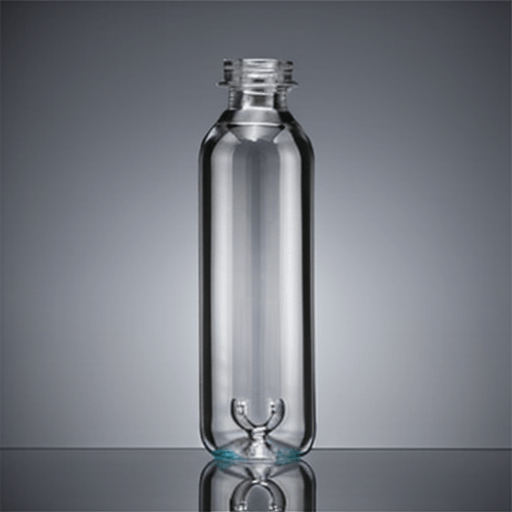
Glass bottles are ubiquitous in stores selling cosmetics, home decor, and beverages. They have gained popularity among manufacturers and consumers for their aesthetic appeal, durability, and recyclability. We will delve into glass bottles, exploring their sizes, shapes, applications, advantages, and disadvantages.
Sizes of Glass Bottles
Glass bottles come in various sizes, from tiny vials to large carboys. The size of a glass bottle is typically measured in milliliters (ml) or ounces (oz). Some standard sizes of glass bottles include:
Small Glass Bottles
Small glass bottles are ideal for storing liquids in small quantities or sampling. They range in size from 1 ml to 100 ml and are popular among manufacturers of essential oils, perfumes, and medicinal products.
Medium Glass Bottles
Medium glass bottles are perfect for storing liquids or powders in larger quantities. They come in sizes ranging from 100 ml to 500 ml and are popular among cosmetics, beverages, and household product manufacturers.
Large Glass Bottles
Large glass bottles typically store liquids or powders in large quantities. They come in sizes ranging from 500 ml to several liters and are popular among manufacturers of beverages, household cleaning products, and industrial chemicals.
Shapes of Glass Bottles
Glass bottles come in various shapes, from traditional round bottles to unique and creative designs. The shape of a glass bottle can affect its function, aesthetics, and branding. Some common shapes of glass bottles include:
Round Glass Bottles
Round glass bottles are the most common shape of glass bottles, with a cylindrical body and a round base. They are popular among manufacturers of beverages, pharmaceuticals, and cosmetics.
Square Glass Bottles
Square glass bottles have a square body and are popular among manufacturers of perfumes, essential oils, and medicinal products.
Oval Glass Bottles
Oval glass bottles have an oval-shaped body and are popular among manufacturers of beverages, cosmetics, and pharmaceuticals.
Specialty Glass Bottles
Specialty glass bottles come in unique and creative shapes, such as heart-shaped, diamond-shaped, and animal-shaped. They are popular among high-end cosmetics, perfumes, and specialty beverage manufacturers.
Applications of Glass Bottles
Glass bottles have various applications in various industries, such as food and beverage, cosmetics, pharmaceuticals, and household products. Some common applications of glass bottles include:
Food and Beverage
Glass bottles are ideal for manufacturers of beverages, such as beer, wine, and juices, as they preserve the product’s flavor, aroma, and purity. Glass bottles are also used to store food products, such as sauces, oils, and condiments.
Cosmetics
Glass bottles are a popular choice among cosmetics and personal care product manufacturers, such as perfumes, lotions, and serums, due to their ability to protect the product from external factors and preserve its effectiveness.
Pharmaceuticals
Glass bottles are commonly used to store medicines and other pharmaceutical products due to their inert properties, which prevent contamination and preserve the product’s potency.
Household Products
Glass bottles are used to store a variety of household products, such as cleaning solutions, air fresheners, and oils. They are popular among consumers due to their durability, reusing, and recycling ability.
Advantages of Glass Bottles
Glass bottles have several advantages over other types of containers, such as plastic and metal. Some of these advantages are:
Aesthetics
Glass bottles have a timeless and elegant appearance, making them popular among manufacturers of high-end products.
Durability
Glass bottles are resistant to scratches, dents, and stains, making them durable for storing liquids and powders.
Recyclability
Glass bottles are 100% recyclable, which makes them an eco-friendly choice for consumers and manufacturers. When recycled, glass bottles can be melted down and reused without losing quality.
Preservation
Glass bottles are inert and do not react with the product they store, preserving its flavor, aroma, and potency. This makes them ideal for storing food, beverages, and pharmaceutical products.
Disadvantages of Glass Bottles
Despite their many advantages, glass bottles also have disadvantages that manufacturers and consumers must consider. Some of these disadvantages are:
Fragility
Glass bottles are fragile and break if dropped or mishandled, making them less suitable for outdoor activities or travel. This fragility can also increase the risk of injury if a glass bottle breaks.
Weight
Glass bottles are heavier than other containers, such as plastic or metal, making them more expensive to transport and store. The weight of glass bottles can also make them more difficult to handle.
Cost
Glass bottles are more expensive to produce than other types of containers, such as plastic or metal. This higher cost can affect the price of products packaged in glass bottles.
Environmental Impact
While glass bottles are recyclable, they still have an environmental impact on energy consumption and waste generation. Manufacturing glass bottles requires significant energy, and the transportation of glass bottles also contributes to carbon emissions. Additionally, not all glass bottles are recycled, which can lead to waste generation in landfills.
Glass bottles are popular among manufacturers and consumers due to their aesthetic appeal, durability, and recyclability. They come in various sizes and shapes and have various applications in various industries. However, they also have disadvantages, such as fragility, weight, and environmental impact. Manufacturers and consumers need to weigh the pros and cons of glass bottles when considering packaging options.
Key Takeaways
| What to do | What it changes | Quick Ingcho path |
|---|---|---|
| Pick a shape people can spot fast | Strong shelf memory and premium feel | Luxury bottle shapes that balance beauty and use |
| Use borosilicate for complex shapes | Better heat, chemical stability, and clarity | Why borosilicate whisky decanters |
| Test grip + pour before final mold | Fewer complaints and fewer returns | Glass bottle molds and prototypes |
| Plan branding early (logo, color, stopper) | Better unboxing and higher gift value | Borosilicate decanter branding options |
| Vet the factory like a checklist | Fewer delays and more stable quality | How to vet supplier production capabilities |
What unique bottle shapes really change
Unique bottle shapes do two jobs at the same time. They help a buyer notice a product fast. They also tell a story before the label does.
Many buyers judge “quality” in seconds. A curved or odd shape can feel premium. A heavy base can feel expensive. A clean silhouette can feel modern. That is why shape can raise visual appeal by about 20–30% in quick shelf checks.
But shape can also cause trouble. Some shapes feel awkward in the hand. Some shapes stack poorly in cartons. Those issues can push 15–25% of people away on repeat buys if daily use feels bad.
If you want a simple base map of shapes, use The different shapes of glass bottles and Glass bottles of various sizes and shapes guide.
Pick the right glass for unique bottle shapes
Glass choice sets the “rules” for your shape. If you pick the wrong glass, the shape looks good in CAD but fails in real production.
Borosilicate helps when you need:
- Thin walls that still feel strong
- Better heat and chemical resistance
- Long-term clarity that stays clean-looking
Start with the basics: Borosilicate vs soda-lime comparison and Borosilicate vs Pyrex differences and benefits.
If the bottle will hold spirits for long storage, check Heat and chemical resistance for alcohol storage and Borosilicate glass long-term clarity advantage. Clean clarity can make a bottle look more premium before a buyer even reads the label.
Use shape to signal value (and avoid “pretty but annoying”)
Shape sends a clear message. Buyers read that message fast.
Common “signals” that work well:
- Wide shoulders + thick base: premium and gift-ready
- Clean symmetry: modern and “safe choice”
- Nature shapes (flower, fruit, animal): playful and collectible
- Asymmetry: bold and innovative (but harder to ship)
A simple rule helps: If the hand grip feels wrong, the story fails. So test these early:
- Grip at wet hands
- Pour angle
- Stopper fit
- Carton fit (drop test + shake test)
For design direction, see Luxury bottle shapes: elegance meets functionality and Custom bottle designs for brand personality. If you need ready options to start from, browse Ingcho products catalog.
Start with a proven hero: globe decanters
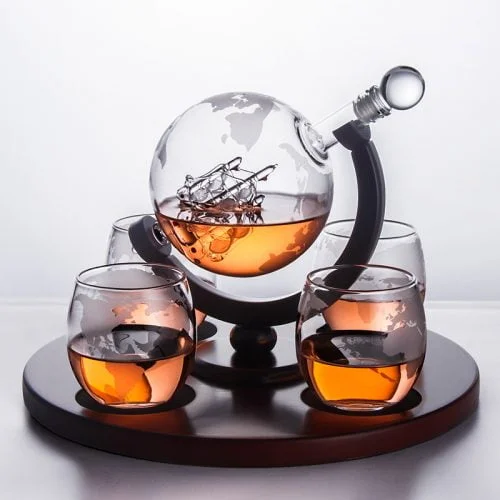
Globe decanters are a “safe bold” shape. They feel special, but they still pour well when the neck is done right.
Good globe design choices:
- A stable stand (wood or metal)
- A neck that seals well
- A base that does not wobble
- Matching glasses that fit the carton
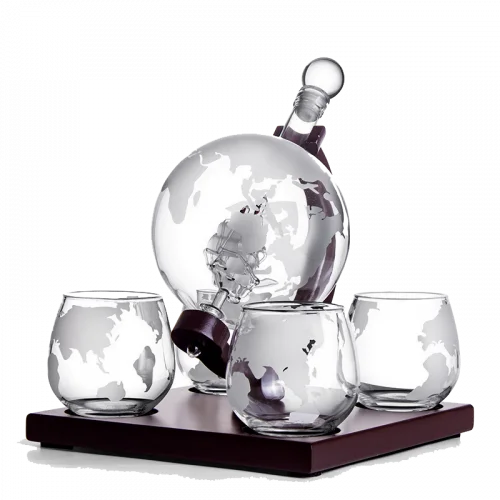
Start with the category: Globe decanter product category. Then compare styles like Globe decanter set and Globe whiskey decanter.

For buyers who want wine use too, check Globe wine decanter and Globe decanters complete guide.
Bold shapes that sell: skull, rose, ship, crystal head
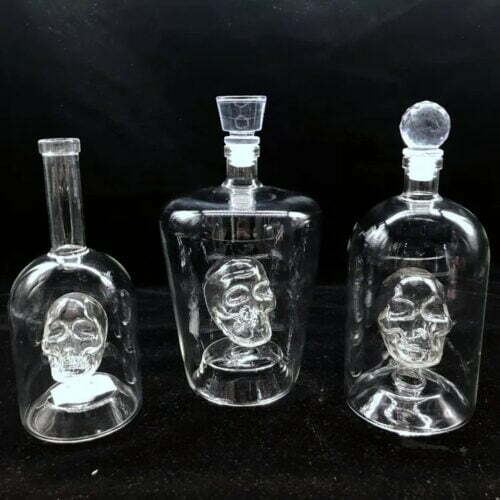
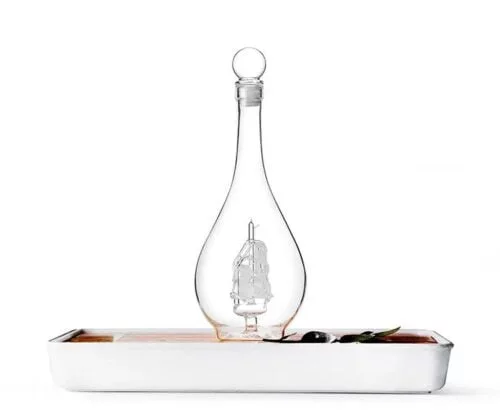
Some shapes sell because people talk about them. They turn into gifts, bar display pieces, and collector items.
Good “talkable” shapes from Ingcho-style lines:
- Skull bottles
- Rose-in-bottle designs
- Ship bottles
- Crystal-head style bottles

Use these pages to match the right family:
If you want a strong “icon head” look, see Crystal head vodka glass bottle product page.
Tequila shapes with story power: agave, skull, dragon, flower

Tequila buyers love story. Shape can carry that story before the label.
Four story shapes that work well:
- Agave plant inside the bottle
- Skull style
- Dragon style
- Flower style

If the brand wants “origin” cues, link story to agave education like What is agave tequila and Explore types of agave for tequila production.

For a clean “gift shelf” look, see Tequila bottle with flower product page and Tequila bottle product category.
Vodka bottle shapes: what the shape “says” to buyers
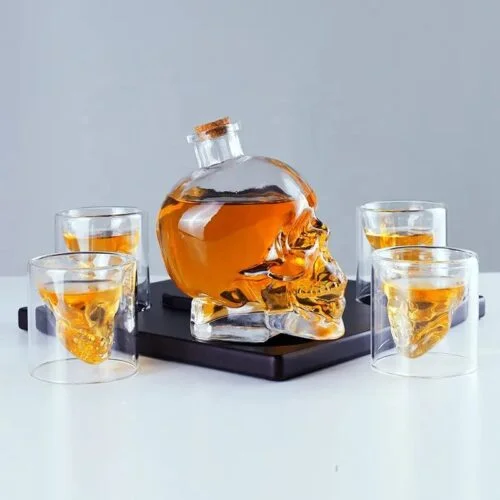
Vodka buyers often expect clean, sharp signals. They want “pure” and “premium.” Shape can do that with simple choices.
Common vodka shape signals:
- Tall and straight = clean and modern
- Sharp edges = bold and “high-end”
- Heavy base = premium value
- Clear glass = purity cue
Use Vodka bottle shapes: what they mean to match shape to message. Then pair it with size planning from Vodka bottle sizes guide.
If you run education pages for adult customers and licensed venues, you can also point to care topics like How to properly store your vodka bottle. Keep the core brand page focused on shape, feel, and display.
Make unique bottle shapes manufacturable: molds, prototypes, OEM/ODM

A shape can fail for simple reasons: thin weak spots, tricky corners, or a neck that will not seal well. You fix that by testing early.
A practical flow that reduces risk:
- Start from a proven base shape
- Add one “hero” detail (skull face, inner rose, agave)
- Build a prototype
- Check wall thickness + balance
- Lock mold details
- Run pilot batch
Use Glass bottle molds and prototypes and Prototype custom bottle for the tooling path.
For full factory flow, use OEM/ODM borosilicate decanters: design to production and Custom glassware manufacturing guide. This keeps the shape fun, but still easy to repeat at scale.
Branding + color + pack-out for unique bottle shapes
A great shape can still lose the sale if branding looks cheap or if the carton arrives broken.
Three branding choices that fit odd shapes well:
- Etched marks or sandblasting
- Screen print on flatter areas
- Hang tags on the neck (when the body is complex)
Use Borosilicate decanter branding options to plan the method. Then pick color wisely with Borosilicate decanter glass colors for whisky appeal.

Pack-out rules that help:
- Add inner supports at “thin points”
- Keep headspace so the bottle cannot slam the box
- Test a full set, not just the bottle
Sourcing unique bottle shapes in China: regions, timing, factory visits

Unique shapes need strong process control. So supplier choice matters more than price.
Start here:
- China borosilicate decanter suppliers
- Top glass manufacturing regions in China
- Hebei vs Guangdong suppliers comparison
Timing also matters. If you order close to peak season, lead time grows fast. Use Best time to source decanters in China.
Before you pay for molds, check the factory in person (or by a strong audit plan). Use China glass factory visit guide and How to vet supplier production capabilities. Focus on consistency, not promises.
Unique glass jars use the same shape rules (plus food-safe checks)
Jar shapes also sell by look and feel. But jars face extra safety rules because people store food in them.
Start with options:
Then plan the lid and label:
For safety, use Material safety for food-grade jars and Why choosing lead-free and food-safe materials matters.
Frequently Asked Questions
What makes unique bottle shapes feel “premium”? Weight, balance, clean clarity, and a shape that looks intentional. Thick bases and smooth lines often feel higher value.
Do unique bottle shapes always boost sales? They often raise first look appeal, but poor grip or hard storage can hurt repeat buys. Test usability early.
Is borosilicate glass better for complex shapes? Borosilicate can handle heat and chemicals well and can keep clarity over time, which helps premium-looking shapes.
What is the biggest mistake in custom-shaped bottles? Skipping prototype testing. Small shape issues become big issues after mold money is spent.
How do I choose a supplier for unique bottle shapes in China? Check their past complex projects, tooling control, QC steps, and packing tests. Use a factory visit or a strict audit.
What unique shapes work well for gifting? Globe decanters, skull bottles, inner-rose designs, and themed tequila bottles often work well because they display nicely.
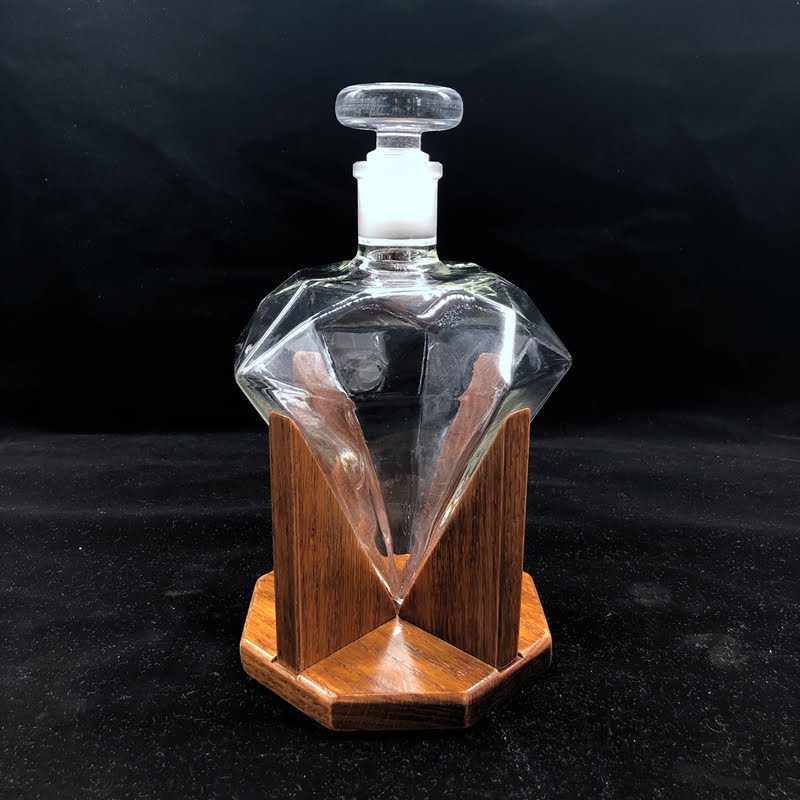
Borosilicate glass bottles are famed for their exceptional durability, heat resistance, and scratch resistance. This glass is unique, created by combining silica and boron oxide, producing a material that can withstand thermal shock. As a result, borosilicate glass bottles are ideal for use across various applications, including scientific experiments, food and beverage storage, and personal care products.
The history of borosilicate glass dates back to the late 1800s when the German glassmaker, Otto Schott, invented the first borosilicate glass. Since then, it has been utilized in numerous industries, including pharmaceuticals, chemicals, and the food and beverage sector.
One of the most significant advantages of using borosilicate glass bottles is their non-reactive nature. Unlike other materials, they do not interact with the container’s contents, preserving the stored items’ taste and quality. Moreover, they are incredibly sturdy and long lasting, making them a cost-effective choice for consumers and businesses.
So, whether you’re storing your favorite drink or conducting a science experiment, borosilicate glass bottles are the ultimate container choice, capable of withstanding even the toughest conditions.
Borosilicate glass bottles offer a range of impressive advantages, making them a popular choice across various industries.
There are some of the most significant benefits:
Heat resistance:
Borosilicate glass bottles can withstand high temperatures of up to 600°C, making them ideal for storing hot beverages like coffee, tea, and soups. They are also suitable for use in scientific experiments that require extreme heat.
Scratch resistance:
Borosilicate glass bottles are highly scratch-resistant, maintaining their clarity and transparency over time. This is an essential feature for businesses that want to present their products professionally and attractively.
Chemical inertness:
Borosilicate glass is non-reactive, which means it doesn’t interact with the bottle’s contents. This is vital for storing and transporting chemicals and other sensitive materials safely.
Durability:
Compared to other types of glass bottles, borosilicate glass bottles are much more durable and longer lasting. This makes them a cost-effective choice in the long run and safer for use in labs and other challenging environments.
Environmentally friendly:
Borosilicate glass is a sustainable material that can be recycled and reused, making it an environmentally friendly choice. Additionally, borosilicate glass bottles are often used as a replacement for single-use plastic bottles, helping to reduce plastic waste and promote sustainability.
In conclusion, borosilicate glass bottles are versatile, durable, and eco-friendly for various applications. Whether you’re looking for a container for your coffee or a safe way to transport chemicals, borosilicate glass bottles have you covered.
Borosilicate glass bottles are versatile and widely used in various industries.
Here are some of the most common uses of borosilicate glass bottles:
Food and beverage storage:
Borosilicate glass bottles are popular for storing food and beverages like sauces, juices, oils, and dressings. Both home cooks and businesses prefer them as they do not leach harmful chemicals and preserve the taste of the food or drink.
Laboratory and scientific experiments:
Borosilicate glass bottles are a staple in labs and scientific experiments as they resist thermal shock, chemical corrosion, and breakage. They are used to store and transport chemicals, reagents, and solvents safely.
Cosmetics and personal care products:
Borosilicate glass bottles are an eco-friendly and sustainable choice for storing cosmetic and personal care products like perfumes, lotions, and oils. They are a popular option among consumers who want to reduce plastic consumption.
Apart from these uses, borosilicate glass bottles are also ideal for storing and transporting pharmaceuticals, oils, lubricants, and other products requiring a durable, safe, and reliable container.
When it comes to glass bottles, there are several options available.
Let’s compare borosilicate glass bottles to other common types of glass bottles:
Soda glass:
This is the most common type of glass used to manufacture glass bottles. It is less expensive than borosilicate glass but less resistant to thermal shock and chemical corrosion. As a result, it is not as durable and long-lasting as borosilicate glass.
Tempered glass:
This type of glass is treated with heat or chemicals to make it stronger and more resistant to breakage. While stronger than soda-lime glass, it is still not as heat-resistant or chemically inert as borosilicate glass.
Fused silica glass:
This type of glass is made from pure silica, which makes it highly resistant to chemical corrosion and thermal shock. However, manufacturing is also more expensive and challenging than borosilicate glass.
Borosilicate glass bottles are the superior choice for businesses and consumers who require a durable, heat-resistant, and chemically inert container for their products. They are a cost-effective, reliable option that can withstand various applications and are environmentally friendly due to their recyclability.
Choosing the right borosilicate glass bottle can be critical for businesses and consumers.
Here are some factors to consider when selecting the perfect borosilicate glass bottle:
Size and shape:
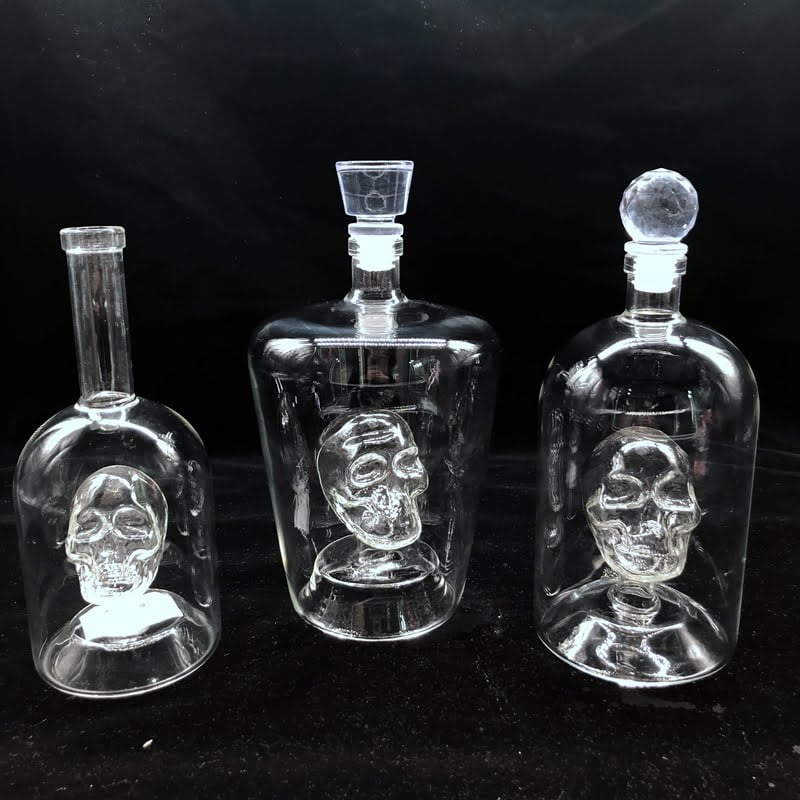
Borosilicate glass bottles come in various sizes and shapes, so choosing one that suits your specific needs is crucial. Consider the volume of the product you will store and the available space.
Cap and closure options:
Borosilicate glass bottles can be fitted with different caps and closures, such as screw caps, snap-on caps, and dropper caps. Consider the type of product you will be storing and the convenience of the selected cap or closure.
Brand and manufacturer reputation:
Choose a reputable brand and manufacturer for your borosilicate glass bottle to ensure the quality and durability of the product. Look for reviews and testimonials from other customers to understand the product’s reliability.
Price and availability:
Borosilicate glass bottles are generally more expensive than soda-lime glass bottles but are more durable and long-lasting. Consider the price and availability of the bottles when choosing a supplier.
Apart from these factors, consider the intended use of the bottle, as well as any specific requirements for storage and transportation. Considering these factors, you can choose the right borosilicate glass bottle that meets your needs and requirements.
Taking care of borosilicate glass bottles is essential to ensure their longevity and safety.
Here are some tips for maintaining borosilicate glass bottles:
Cleaning and sanitizing:
Borosilicate glass bottles can be cleaned with warm water and soap. For thorough cleaning, use vinegar and water or baking soda and water. To sanitize the bottle, soak it in water and bleach.
Handling and storing:
Handle and store borosilicate glass bottles carefully to prevent breakage. Avoid stacking heavy objects on the bottles and use protective packaging when transporting them.
Avoiding thermal shock:
Although borosilicate glass bottles are highly resistant, they can break if exposed to extreme temperature changes. Gradually warm up or cool down the bottle to avoid thermal shock.
Proper care and maintenance of borosilicate glass bottles can help extend their lifespan and ensure their durability and safety.
Thank you for reading our post on “What You Need to Know About Borosilicate Glass Bottles.” We hope you found this information helpful and informative.
As whiskey enthusiasts, we know that the taste and aroma of a good whiskey depend not only on the quality of the spirit but also on the vessel that holds it. A well-designed whiskey decanter not only adds a touch of sophistication to your home bar but also protects the whiskey from oxidation and preserves its flavor.
This post will present you with our top picks of whiskey globe decanters, which uniquely combine style and function. Whether you are looking for a gift for a whiskey lover or want to upgrade your bar collection, these decanters are sure to impress.
1. Whiskey Globe Decanter Set with Wooden Stand
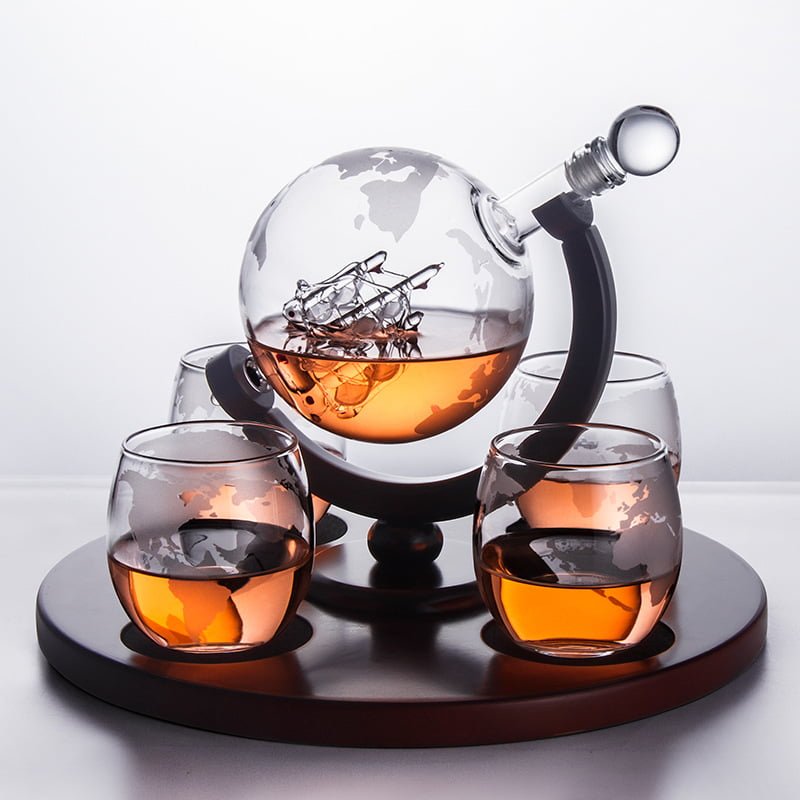
Glass Globe Decanter
This whiskey globe decanter set features a beautifully crafted glass globe with a wooden stand and four matching glasses. The decanter holds up to 850ml of whiskey, and the glasses are designed to fit perfectly on the wooden stand, which rotates for easy pouring.
The glass globe is hand-blown and features a detailed map of the world, making it a great conversation starter for your guests. The wooden stand is made of high-quality, dark-stained wood and has a smooth, glossy finish that complements the glass globe perfectly.
2. Etched Globe Whiskey Decanter with Antique Ship
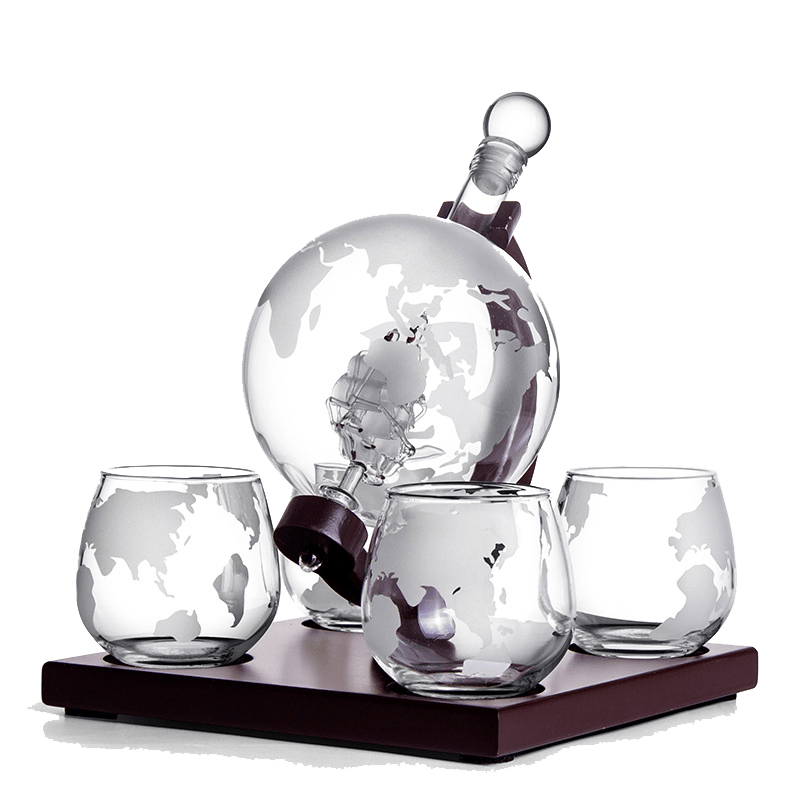
Globe Decanter and Glasses
This etched globe whiskey decanter is a true work of art. The glass globe is intricately etched with a world map, and the antique ship inside adds a touch of nostalgia and adventure to your bar collection.
The decanter holds up to 850ml of whiskey, and the glass stopper provides an airtight seal to preserve the flavor of your whiskey. The decanter also comes with a wooden stand that has a rustic, antique look, adding to the overall charm of the set.
3. With Wave-shaped Long Wood Tray
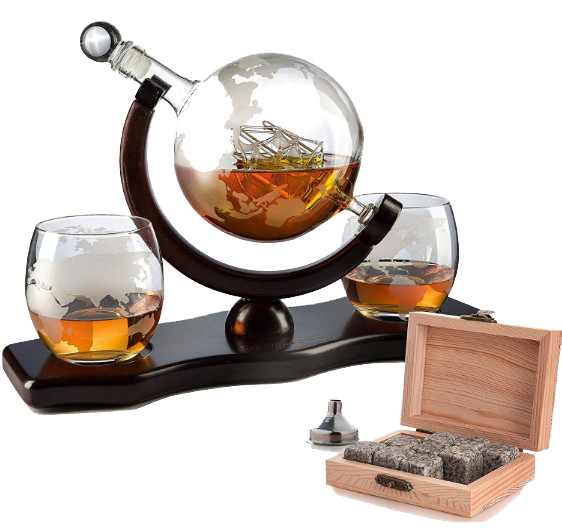
Globe Whiskey Decanter
The centerpiece of this set is a beautifully crafted glass globe decanter that holds up to 850ml of your favorite whiskey. The decanter features a detailed map of the world, which makes it a great conversation starter for your guests. The glass stopper provides an airtight seal to protect the flavor and aroma of your whiskey.
But what really sets this set apart is the wave-shaped long wood tray. Made of high-quality, dark-stained wood, the tray has a unique, undulating shape that mimics the movement of waves on the ocean. The tray is not only beautiful but also practical, providing a stable base for the decanter and glasses.
4. Whiskey Globe Decanter with Plane
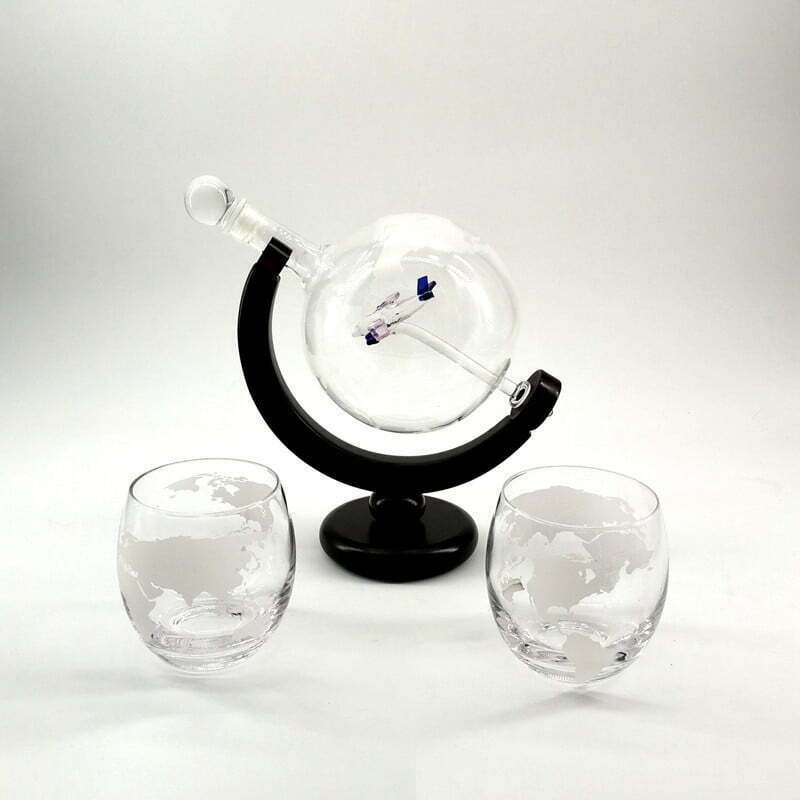
This whiskey globe decanter is similar to the etched globe decanter but features an antique plane inside instead of a ship. The glass globe is also intricately etched with a map of the world, and the wooden stand has a vintage look that complements the overall design.
The decanter holds up to 1000ml of whiskey, and the glass stopper provides an airtight seal to protect the flavor of your whiskey. The decanter also comes with a pouring funnel to make filling it with your favorite whiskey a breeze.
Conclusion
In conclusion, these whiskey globe decanters are not only functional but also works of art that add a touch of elegance and sophistication to any home bar. Whether you prefer a traditional or modern look, there is a whiskey globe decanter for everyone.
We hope our top picks have inspired you to take your whiskey-drinking experience to the next level. Check out our other articles and guides if you want more ideas and tips on enhancing your home bar.
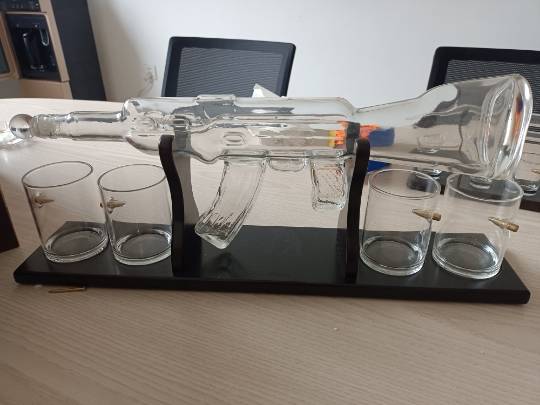
1) What is whiskey decanter?
1.1 Explanation of what a whiskey decanter is
Whiskey decanters are elegant vessels designed to hold and serve whiskey. They are commonly used in homes and bars to enhance the presentation of whiskey and improve its taste and aroma.
1.2 Brief history of whiskey decanters
Whiskey decanters have a long history, dating back to the 17th century when they were first used to serve whiskey in Europe. Initially made of glass, they were later crafted from crystal, ceramic, and even stainless steel. Over time, whiskey decanters have become collectible pieces, and many people use them as stylish and functional elements in their homes.
2) The Importance of a Whiskey Decanter
2.1 Enhancing the presentation of whiskey
Whiskey decanters add an element of sophistication to any home bar or dining table, instantly elevating the presentation of whiskey. They are designed to catch the light in a way that showcases the color and clarity of the whiskey, making it look more appealing to the eye.
2.2 Improving the taste and aroma of whiskey
Whiskey decanters are also designed to enhance the taste and aroma of whiskey. By allowing the whiskey to breathe, the decanter helps to release the full range of flavors and aromas, making each sip more enjoyable. Additionally, whiskey decanters with wide necks allow for easy access to the whiskey, making it easier to enjoy the full bouquet.
2.3 Preserving the quality of the whiskey
Removing whiskey from its original bottle and storing it in a decanter can also help preserve its quality. This is especially important for aged whiskey, which can deteriorate over time if exposed to air, light, or temperature fluctuations.
3) Types of Whiskey Decanters
3.1 Crystal decanters
Crystal decanters are made from high-quality glass that has been cut and polished to create a beautiful, sparkling appearance. They are the most traditional whiskey decanter and are often used in upscale settings.
3.2 Glass decanters
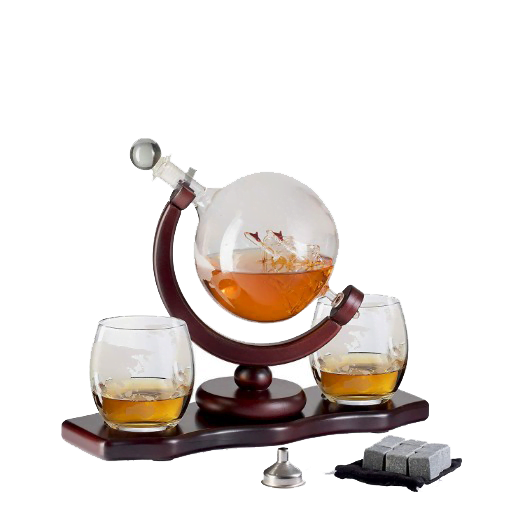
Glass decanters are less expensive than crystal and are often used in casual settings. They come in various shapes, sizes, and designs, making them popular for home bar collections.
Introducing the finest quality glass decanters from Ingcho Glass, a leading manufacturer based in China. With a passion for crafting unique and elegant pieces, our decanters are designed to add a touch of sophistication to any beverage. Each decanter is made from premium-grade glass and is handcrafted with the utmost care and attention to detail.
We offer OEM services, allowing you to customize our decanters to meet your specific needs. This includes custom branding, packaging, and design options so that you can offer unique and memorable products to your customers.
3.3 Ceramic decanters
Ceramic decanters offer a unique and elegant look, and they can be used to serve both whiskey and other types of liquor. They are often hand-painted and a popular choice for those looking for something different.
3.4 Stainless steel decanters
Stainless steel decanters are the most modern type of whiskey decanter. They are sleek and stylish and often feature unique designs that make them a standout in any home bar. They are also durable and easy to clean, making them a popular choice for everyday use.
4) How to Use a Whiskey Decanter
4.1 Preparing the decanter
Before using a whiskey decanter, it is important to prepare it properly. This involves washing the decanter with warm water and mild soap and drying it thoroughly before use.
4.2 Pouring the whiskey
When pouring whiskey into a decanter, it is important to pour slowly and steadily to avoid creating bubbles. Leave room at the top of the decanter so the whiskey can breathe.
4.3 Storing the decanter
Once the whiskey has been poured into the decanter, it is important to store it in a cool, dark place to help preserve its quality. Avoid exposing the decanter to direct sunlight or temperature fluctuations, as these can cause the whiskey to deteriorate over time.
5) Conclusion
5.1. Recap of the benefits of using a whiskey decanter
Whiskey decanters play a significant role in enhancing the overall whiskey-drinking experience. They can enhance the presentation of whiskey, improve the taste and aroma, and preserve the quality of the whiskey.
5.2 Recommendations for selecting a whiskey decanter
When choosing a whiskey decanter, it is important to consider factors such as the type of whiskey served, the occasion, and personal preferences. For example, crystal decanters are perfect for upscale events, while stainless steel decanters are ideal for everyday use.
5.3 Final thoughts on the role of a whiskey decanter in the whiskey-drinking experience
In conclusion, a whiskey decanter is not only a beautiful addition to a home bar, but it is also an essential tool for improving the overall whiskey-drinking experience. Whether you are a whiskey connoisseur or just enjoy sipping on a drink now and then, a whiskey decanter is a must-have for any whiskey lover.
Borosilicate glass is known for its high thermal resistance and low expansion coefficient. It is a popular material for various applications, including laboratory equipment, cookware, and lighting.
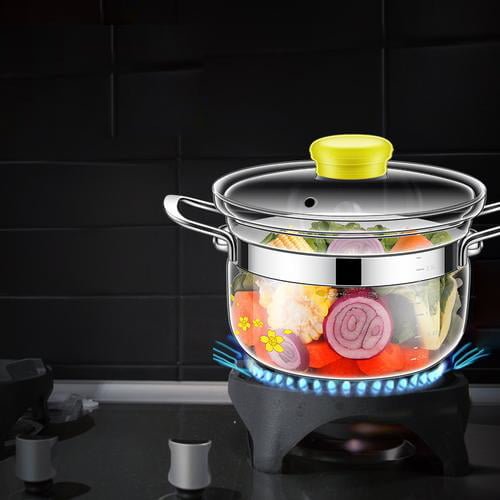
This post will explore the properties and applications of borosilicate glass, introduce some of the leading borosilicate glass manufacturers, and offer tips for choosing a reputable and reliable borosilicate glass manufacturer.
Whether you are in the market for borosilicate glass products or are simply interested in learning more about this unique material, this information will be helpful.
1) What is borosilicate glass:
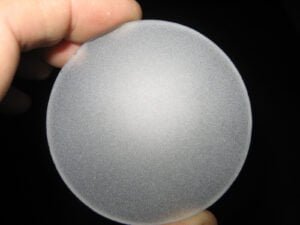
Borosilicate glass is a type of glass that is made from silica, boric oxide, and other materials. It is known for its high thermal resistance and low coefficient of expansion, making it ideal for many applications. Borosilicate glass has a melting point of around 1,400°C and is resistant to thermal shock, which means it can withstand sudden changes in temperature without breaking. It is also resistant to chemical attack, making it a durable and long-lasting material.
In addition to its physical properties, borosilicate glass is also optically clear. It has a low refractive index, which makes it ideal for use in laboratory equipment and other applications where transparency is essential. It is also resistant to UV radiation, making it suitable for outdoor use.
Borosilicate glass is a versatile and durable material well-suited for various applications. It is known for its ability to withstand high temperatures, chemical attacks, and other harsh conditions, making it a reliable choice for many industries.
If you want to know more about borosilicate glass, check out the following articles:
Borosilicate Glass’s Application and Development
2) Applications of borosilicate glass:
Borosilicate glass is used in a wide range of applications, including:
2.1 Laboratory equipment:
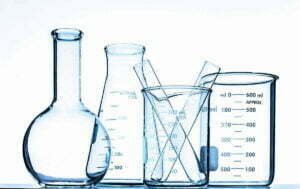
Due to its high thermal and chemical resistance, Borosilicate glass is commonly used in laboratory equipment, such as beakers, flasks, and test tubes. It is also optically clear and has a low refractive index, making it ideal for precision measurement and analysis.
2.2 Cookware:
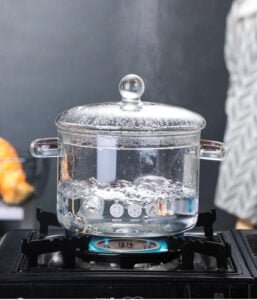
Borosilicate glass is often used in producing cookware, such as baking and casserole dishes, due to its ability to withstand high temperatures and transparency. It is also resistant to thermal shock, which makes it less likely to break when placed in a hot oven.
2.3 Drinkware:
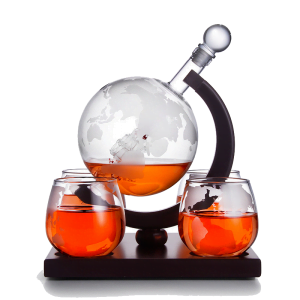
Borosilicate glass drinkware is a type of glassware that is made from borosilicate glass, a special type of glass that is known for its high thermal resistance and low coefficient of expansion. This makes it ideal for use with hot or cold beverages, as it can withstand sudden changes in temperature without breaking.
Borosilicate glass drinkware is also known for its transparency and low refractive index, which allows it to show off the colors and patterns of your favorite drinks. It is also easy to clean and dishwasher safe, making it a convenient choice for daily use.
Borosilicate glass drinkware is a stylish and functional choice for all your beverage needs. It is well-suited for use in the home, in restaurants, and in other settings where high-quality glassware is desired. It is available in a wide range of styles, including decanters, mugs, and other types of drinkware, so you can find the perfect fit for your needs.
2.4 Lighting:
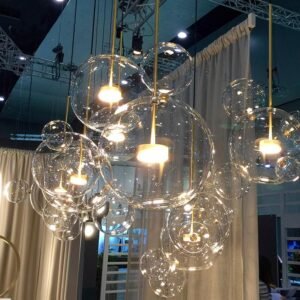
Due to its high temperature and UV resistance, borosilicate glass is also used in producing lighting fixtures, such as street lamps and floodlights. It is also optically transparent, allowing light to pass through it quickly.
2.5 Other applications:
Borosilicate glass is also used in various applications, such as in the production of medical and scientific instruments, as a replacement for traditional glass in windows and doors, and in producing art and decorative objects.
Borosilicate glass is a versatile material well-suited for a wide range of applications due to its unique properties and durability.
3) Leading borosilicate glass manufacturers:
Many companies specialize in the production of borosilicate glass products. Some of the leading borosilicate glass manufacturers include:
3.1 Ingcho:
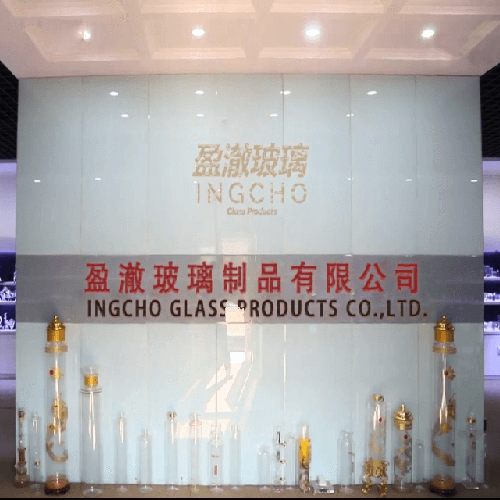
Ingcho is a leading producer of high-quality borosilicate glass products, serving customers around the world.
Ingcho factory is located in Hejian, Hebei, China- The heat-resistant glass production base in China, and Ingcho has been in the borosilicate glass industry for 20 years.
At Ingcho factory, Ingcho uses state-of-the-art equipment and advanced manufacturing processes to produce a wide range of borosilicate glass products, including laboratory equipment, cookware, lighting, and other products. Ingcho also offers custom fabrication services to meet the specific needs of our customers.
3.2 Schott:

Schott is a global leader in producing borosilicate glass products, including laboratory equipment, lighting, and cookware. The company has a long history of innovation and is known for its high-quality products.
3.3 Kimble Chase:

Kimble Chase is a leading supplier of borosilicate glass products, including laboratory equipment, cookware, and lighting. The company is known for its high-quality products and customer service.
3.4 Borosil:

Borosil is a leading manufacturer of borosilicate glass products, including laboratory equipment, cookware, and lighting. The company is known for its innovation and commitment to quality.
3.5 Pyrex:
Pyrex is a well-known brand of borosilicate glass products, including laboratory equipment, cookware, and art and decorative objects. The company is known for its high-quality products and long history of innovation.
These are just a few examples of the many companies that specialize in producing borosilicate glass products. No matter your needs, a borosilicate glass manufacturer can likely meet them.
4) Factors to consider when choosing a borosilicate glass manufacturer:
When choosing a borosilicate glass manufacturer, there are several factors that you should consider to ensure that you are working with a reputable and reliable company:
4.1 Experience and expertise:
Look for a manufacturer with a track record of producing high-quality borosilicate glass products and a deep understanding of the material and its properties.
4.2 Production capabilities:
Consider the manufacturer’s capabilities to ensure that they meet your volume and delivery requirements.
4.3 Quality control processes:
Look for a manufacturer with robust quality control processes to ensure that their products meet the necessary standards.
4.4 Customer service:
Choose a responsive manufacturer that provides excellent customer service to ensure you receive the support you need throughout the manufacturing process.
4.5 Price:
While price is an important factor, it is not the only factor. Make sure to balance the price with the other factors listed above to ensure you get the best value for your money.
By carefully evaluating these factors, you can choose a borosilicate glass manufacturer that is well-suited to meet your needs and provide high-quality products.
5) Conclusion:
Borosilicate glass is a versatile and durable material well-suited for various applications. Many companies specialize in borosilicate glass products, and it is essential to carefully research and evaluate potential manufacturers to ensure that you choose the best one for your needs. You can find a reliable and reputable borosilicate glass manufacturer that can provide the products you need by considering factors such as experience and expertise, production capabilities, quality control processes, customer service, and price.
1) Introduction:
Sterilizing jars is important in preserving food or making homemade jams, pickles, or other preserved products. By sterilizing jars, you can ensure that the food you put inside them will be free from harmful bacteria, yeast, and mold that can cause spoilage or illness.
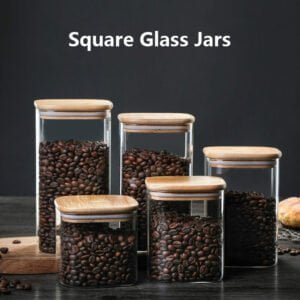
This post will explore the reasons for sterilizing jars, the different methods, and tips for properly sterilizing your jars. Whether you are new to preserving food or have been doing it for years, this information will help you ensure that your preserved products are safe and of the highest quality.
2) Why sterilize jars:
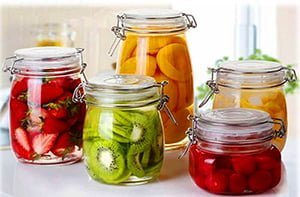
There are several important reasons why it is important to sterilize jars before preserving food or making homemade jams, pickles, or other preserved products. First and foremost, sterilizing jars helps to prevent contamination of the food inside the jar. Bacteria, yeast, and mold can all cause food to spoil or become unsafe. By sterilizing the jar, you can kill any existing microorganisms and reduce the risk of contamination.
Sterilizing jars can also help to extend the shelf life of preserved foods. Because sterilized jars are free from microorganisms, the preserved food inside has a longer shelf life and is less likely to spoil. This is especially important if you make large batches of preserves or if you plan to store your preserved food for an extended period.
If you are looking for reliable glass jars, I recommend you choose Ingcho Glass.
Sterilizing jars is critical in preserving food and ensuring that the finished product is safe and high-quality. By taking the time to sterilize your jars, you can ensure that your preserved foods are free from contamination and have a longer shelf life.
3) Methods for sterilizing jars:
There are several methods for sterilizing jars, each with pros and cons. Here are four common methods for sterilizing jars:
3.1 Boiling:
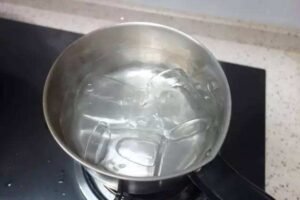
This is the most common method for sterilizing jars. To sterilize jars, fill a large pot with water and bring it to a boil. Then, carefully place the jars in the boiling water, ensuring they are fully submerged. Boil the jars for at least 10 minutes to ensure they are properly sterilized. One advantage of this method is that it is relatively easy and requires no special equipment. However, it is important to be careful when handling boiling jars, as they can be very hot and breakable.
3.2 Baking:
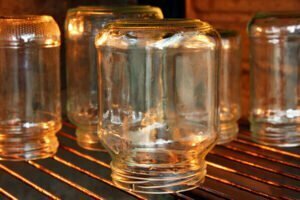
Another option for sterilizing jars is to bake them in the oven. To do this, preheat your oven to 225°F and place the jars on a baking sheet. Bake the jars for at least 20 minutes to ensure they are properly sterilized. One advantage of this method is that it is relatively hands-off and requires no special equipment. However, it is important to be careful when handling hot jars and to use oven mitts when removing them from the oven.
3.3 Pressure cooker:
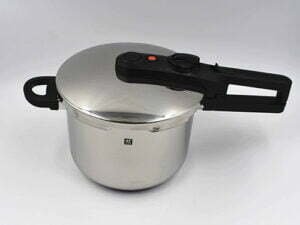
If you have a pressure cooker, you can also use it to sterilize jars. To do this, place the jars in the pressure cooker and add water until the jars are fully submerged. Follow the manufacturer’s instructions for your pressure cooker to bring the water to a boil and release the pressure. This method is quick and efficient and is a good option if you sterilize many jars simultaneously. However, it requires a pressure cooker, which may be something only some have.
3.4 Dishwasher:
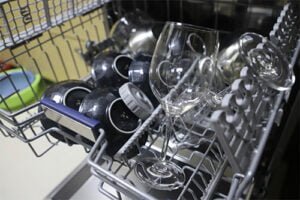
Using a dishwasher is a convenient way to sterilize glass jars, especially if you have many jars to sterilize at once. Load the jars into the dishwasher and run a normal cycle using hot water and a high heat setting. This method is suitable for preserving a wide range of items as long as the jars are designed to withstand the heat and pressure of a dishwasher.
No matter which method you choose, it is important to follow the instructions carefully and handle the jars carefully to avoid breaking them. Use tongs or oven mitts to handle the hot jars, and let the jars cool completely before filling them with food.
4) Tips for successful sterilization:
To ensure that your jars are properly sterilized and ready for preserving food, here are a few tips to follow:
Please make sure the jars are clean before sterilizing:
Before sterilizing them, clean them thoroughly with soap and hot water. Any dirt or residue on the jars could potentially harbor bacteria or other microorganisms, contaminating the preserved food.
4.1 Ensure that the jars are fully submerged in water when boiling:
When sterilizing jars by boiling, it is important to ensure that the jars are fully submerged in water. If the water level is too low, the jars may not be properly sterilized.
4.2 Use a timer:
To ensure that the jars are sterilized for the recommended time, it is a good idea to use a timer. This will help you avoid under or over-sterilizing the jars.
4.3 Allow the jars to cool completely before filling:
After sterilizing them, it is important to allow them to cool completely before filling them with food. If the jars are still hot when you fill them, the sudden temperature change could cause them to break.
Following these tips can help ensure that your jars are properly sterilized and ready for preserving food.
5) Conclusion:
In conclusion, sterilizing jars is important in preserving food and making homemade jams, pickles, and other preserved products. By sterilizing the jars, you can prevent contamination and extend the shelf life of the finished product. Several methods for sterilizing jars include boiling, baking, and using a pressure cooker. No matter which method you choose, follow the instructions carefully and handle the jars with care to ensure that they are properly sterilized. Following these guidelines can help ensure that your preserved foods are safe and of the highest quality.
1. Introduction:
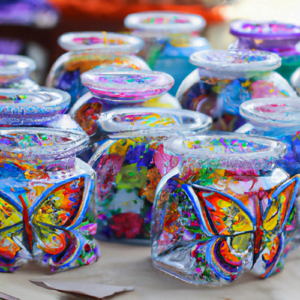
Glass painting on jars is a popular craft activity that allows you to create unique and personalized home decor, repurpose old jars, and make gifts for friends and family.
With just a few materials and creativity, you can transform ordinary jars into beautiful works of art. In this post, we’ll explore the benefits of glass painting on jars, provide a list of materials needed, and offer a step-by-step guide on creating your glass-painted jars. We’ll also share tips and tricks to help you achieve beautiful, professional-looking results. Whether you’re a beginner or an experienced crafter, glass painting on jars is a fun and rewarding activity that anyone can enjoy. So, let’s get started!
2. Benefits of glass painting on jars:
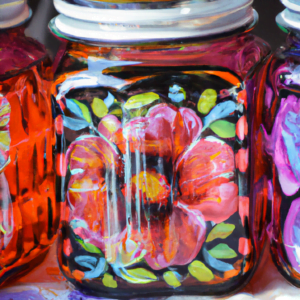
There are many benefits to glass painting on jars, making it a popular craft activity for both beginners and experienced crafters. Here are just a few of the benefits:
2.1 Unique and personalized home decor:
Glass painting on jars allows you to create one-of-a-kind home decor tailored to your style and preferences. You can choose the colors, patterns, and designs that best reflect your personality and taste.
Repurposing old jars: Glass painting on jars is a great way to repurpose old jars that you might otherwise throw away. This not only saves you money on buying new decor, but it’s also environmentally friendly.
2.2 Gifts for friends and family:
Glass-painted jars make thoughtful and personal gifts for friends and family. Whether you’re celebrating a special occasion or want to show someone you care, a glass-painted jar is a unique and heartfelt gift.
2.3 Relaxing and therapeutic:
Glass painting on jars is a relaxing and therapeutic activity that allows you to unwind and de-stress. It’s a great way to tap into your creative side and enjoy some “me” time.
Fun and rewarding: Glass painting on jars is a fun and rewarding activity that anyone can enjoy. Whether you’re a beginner or an experienced crafter, the sense of accomplishment you’ll feel when you complete a beautiful glass-painted jar is priceless.
3. Materials needed:
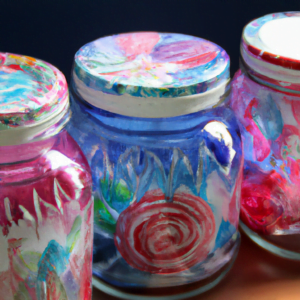
You’ll need a few basic materials to start with glass painting on jars. These include:
3.1 Jars:
Any jar will work for glass painting as long as it is made of glass. You can use borosilicate glass jars, mason jars, pickle jars, or any other type of jar that you have on hand. Just be sure to clean and dry the jars thoroughly before painting.
If you want to know more about how to Sterilize Jars, check out the following articles:
How to Sterilize Jars for Preserving Food: A Step-by-Step Guide
3.2 Glass paint:
Glass paint is specially formulated to bond with glass surfaces, so it’s the best choice for glass painting on jars. You can find glass paint in various colors and finishes, such as matte, glossy, or metallic. Just be sure to follow the manufacturer’s instructions for the best results.
3.3 Brushes:
You’ll need a variety of brushes for glass painting on jars, including small, medium, and large sizes. Invest in special brushes, such as liner or round brushes, for added detail work.
3.4 Sealer:
After you’ve finished painting your jar, you’ll want to seal the paint to protect it from wear and tear. Several types of sealer are available, including clear spray sealer or brush-on sealer. Just be sure to follow the manufacturer’s instructions for the best results.
4.Step-by-step guide:
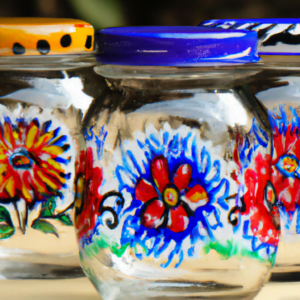
Prepare the jar: Clean and dry the jar thoroughly before painting. If you’re using a jar with a label, you may need to remove it or cover it with masking tape.
4.1 Select and mix colors:
Choose the colors and finishes you want to use for your jar. You can mix colors to create custom shades or use multiple colors to create a striped or marbled effect.
4.2 Apply the paint:
Use your brushes to apply the paint to the jar, starting from the top and working your way down. You can use thin, even strokes for a smooth finish or thicker, textured strokes for a more rustic look.
4.3 Add details and finishing touches:
Use liner brushes or other special brushes to add details and finishing touches to your jar. You can create patterns, designs, or words with the paint.
4.4 Seal the paint:
Once satisfied with your jar, allow it to dry completely before sealing it. Follow the manufacturer’s instructions for the best results.
5. Several types of paint
Several types of paint can be used on glass jars, each with unique properties and characteristics. This post will discuss four types of paint used on glass jars: acrylic paint, enamel paint, glass paint, and chalk paint.
5.1 Acrylic paint:
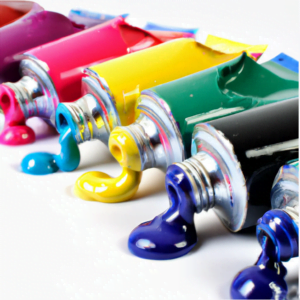
Acrylic paint is a water-based paint suitable for use on glass jars. It is easy to clean up and is available in many colors, making it a versatile option for painting glass jars. Acrylic paint dries quickly and is relatively easy to work with, making it a good choice for beginners or projects that need to be completed quickly. One potential drawback of acrylic paint is that it is less durable than other types of paint and may fade or chip over time.
5.2 Enamel paint:
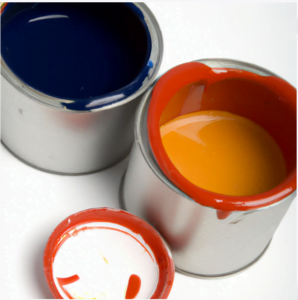
Enamel paint is oil-based paint known for its durability and resistance to chipping and fading. It is suitable for use on glass jars and is available in many colors, making it a versatile option for painting glass jars. Enamel paint takes longer to dry than acrylic paint and may require more time and effort to apply, but it is generally more durable and long-lasting. One potential drawback of enamel paint is that it is more difficult to clean up than water-based paints, as it requires using solvents such as turpentine or mineral spirits.
When using enamel paint on glass jars, it is important to follow the manufacturer’s instructions and allow the paint to dry completely before handling the jars. To ensure the best results, it may be helpful to use a primer before applying the paint, as this can help the paint adhere better to the glass surface. Enamel paint is a good choice for projects that require a durable, long-lasting finish, such as storage jars or decorative items that will be handled frequently.
5.3 Glass paint:
Glass paint is a special type of paint that is specifically formulated for use on glass surfaces. It is available in a wide range of colors and finishes, including matte, glossy, and frosted, making it a versatile option for painting glass jars. Glass paint is generally easy to work with and dries quickly. It is known for its good adhesion to glass surfaces.
When using glass paint on glass jars, it is important to follow the manufacturer’s instructions and allow the paint to dry completely before handling the jars. To ensure the best results, it may be helpful to use a primer before applying the paint, as this can help the paint adhere better to the glass surface. Glass paint is a good choice for projects that require a high-quality, professional finish, such as decorative items or gift items.
One potential drawback of glass paint is that it is less durable than other types of paint and may fade or chip over time, especially if the painted jars are subjected to frequent handling or washing. To help extend the lifespan of your painted glass jars, it is a good idea to handle them gently and to avoid washing them with abrasive materials.
5.4 Chalk paint:
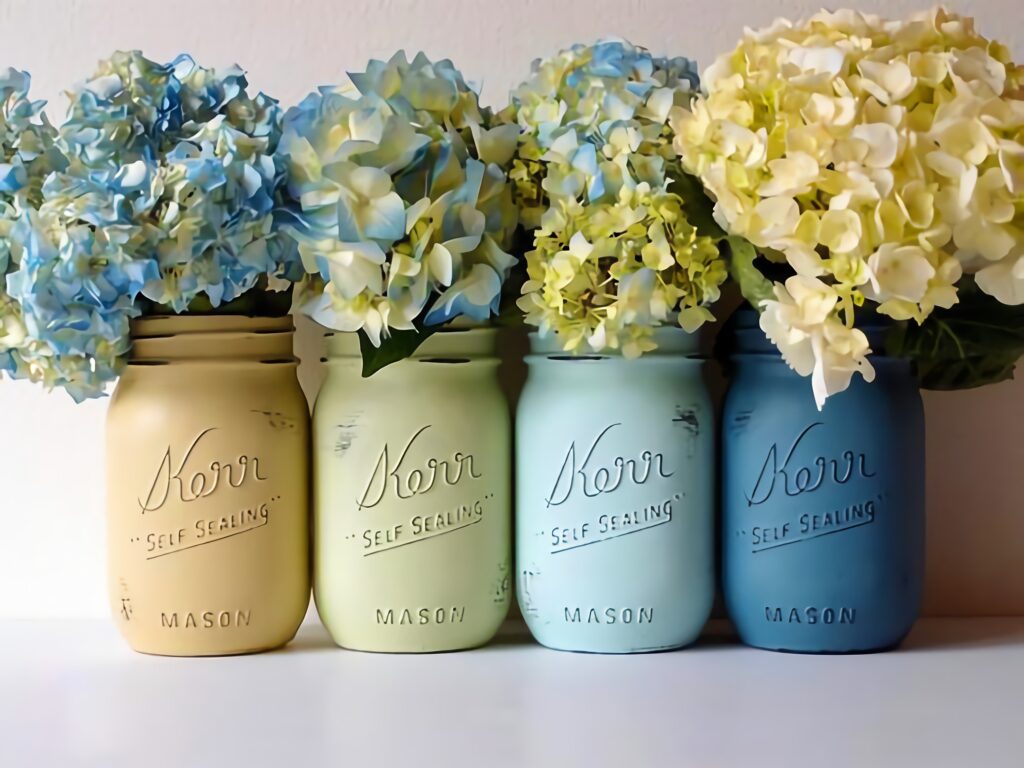
Chalk paint is a type of paint that can be used to create a matte, distressed finish on glass jars. It is easy to work with and is available in many colors, making it a versatile option for painting glass jars. Chalk paint is generally easy to apply and dries quickly, and it is known for its ability to create a rustic, vintage-inspired look.
When using chalk paint on glass jars, it is important to follow the manufacturer’s instructions and allow the paint to dry completely before handling the jars. To achieve a distressed finish, it is a good idea to apply a base coat of paint and then sand the surface lightly after the paint has dried. Chalk paint is a good choice for projects that require a rustic or vintage look, such as decorative items or storage jars.
One potential drawback of chalk paint is that it is less durable than some other types of paint and may fade or chip over time, especially if the painted jars are subjected to frequent handling or washing. To help extend the lifespan of your painted glass jars, it is a good idea to handle them gently and to avoid washing them with abrasive materials.
6. Tips and tricks:
6.1 Use stencils or stamps:
To add extra detail and precision to your glass-painted jar, you can use stencils or stamps. Place the stencil or stamp on the jar and dab or brush the paint over it.
6.2 Layer paint for added depth:
To create a more dimensional and realistic look, you can layer paint on your jar. Start with a base color, then add layers of different colors or finishes to create depth and texture.
Seal the paint to protect it: To protect your glass-painted jar from wear and tear, seal the paint with a clear spray sealer or brush-on sealer. This will help the paint last longer and maintain its vibrant color.
7. Conclusion:
Glass painting on jars is a fun and rewarding craft activity that allows you to create unique and personalized home decor, repurpose old jars, and make gifts for friends and family. With just a few materials and creativity, you can transform ordinary jars into beautiful works of art. Whether you’re a beginner or an experienced crafter, glass painting on jars is an activity that anyone can enjoy. So why not give it a try and see what amazing creations
I. Introduction
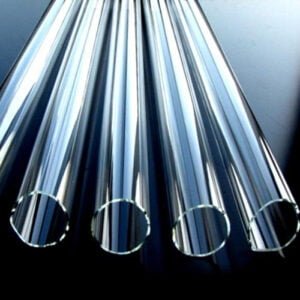
Borosilicate glass has good thermal and chemical stability and has been widely used in instrument glass, vessel glass, etc.; with the development of the glass melting process and refractory materials, borosilicate glass will be used in more fields.
What is borosilicate glass?
Borosilicate glass is a glass whose basic composition is SiO2: B2O3, Na2O.
The basic composition range :
ω(SiO2) = 70% ~ 80%, ω(B2O3) = 6% ~ 15%, ω(Na2O) = 4% ~ 10%, ω(Al2O3) = 0 ~ 5%, ω(BaO) = 0 ~ 2%, ω(CaO) = 0 ~ 2%.
A few typical representative components are as follows:
Where Na2O provides free oxygen to transform the boron oxygen triangle [BO3] into boron oxygen tetrahedra [BO4], and the structure of boron is transformed from lamellar to shelf-like, creating conditions for B2O3 to form a uniform and consistent glass with SiO2.
B2O3 enters the glass structure with [BO3] or [BO4], especially when it forms a structural network with [BO4] and [SiO4] together, which increases the network integrity and compactness, so borosilicate glass has many excellent properties: Such as good thermal and chemical stability, good mechanical properties and process properties, excellent optical properties, etc.
Advantages of borosilicate glass
(1) Thermal properties
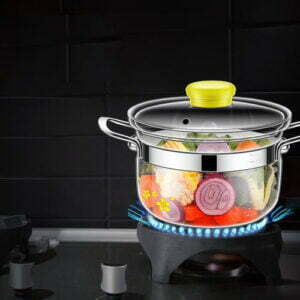
Borosilicate glass has excellent thermal properties due to its high content of SiO2: and B2O3, which makes its network integrity and density better than ordinary soda-lime-silica glass. Such as, its coefficient of thermal expansion is generally less than 6 × 10⁻⁷ / ℃, while ordinary soda-lime-silica glass is about (9 ~ 100) × 10-7 / ℃; borosilicate glass heat impact △ T is generally greater than 150 ℃, known as hard glass or extra hard glass, ordinary soda-lime-silica glass is less than 100 ℃. Therefore, borosilicate glass has good thermal stability and can be used in utensils and cookware, architectural fire protection, etc.
(2)Optical properties
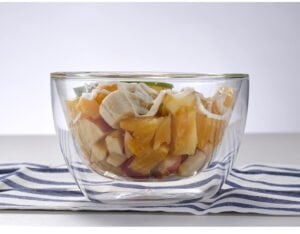
Pure raw materials, uniform mixing, and processing precision, combined with their excellent performance, result in a high light transmission of borosilicate glass. Better light transmittance, higher surface flatness, and lower fluorescence properties enable borosilicate glass to be used in electrophoresis, optics, photonics, and optoelectronics. Since the borosilicate system is more soluble for rare earth oxides than the silicate system and has a relatively wide range of glass formation, the rare earth borosilicate system has become the main system for people to study rare earth optical glasses. Studies have shown [3] that the lanthanum-containing borosilicate glass system can be expected as a system for developing high-density glasses.
(3) Mechanical properties
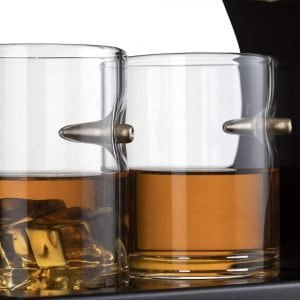
Borosilicate glass not only has a high thermal shock strength but also has a high surface hardness that can prevent scratches; at the same time, its density is about 12% lower than that of ordinary soda-lime-silica glass (borosilicate glass is generally 2.3 g / cm3, soda-lime-silica glass is generally 2.5 g / cm3). These significant advantages mean that borosilicate glass will be used for many important applications, such as glass for construction, especially high-rise buildings, which will greatly reduce the weight of the overall building, which is also in line with the development of modern architecture in the direction of lightweight and high strength; can also be used as bullet-proof glass and armored car glass. In addition, its high strength, lightweight, and high bond strength will greatly reduce the cost, volume, and weight if used in fields that require lamination and sandwiching.
(4) Chemical properties
In addition to its good resistance to acid and alkali, borosilicate glass has fairly good resistance to hydrolysis, two grades higher than soda-lime-silica glass. It can resist water vapor in the air and even water containing liquid acid or alkali. Unlike soda-lime-silica glass, it is subject to significant erosion. Especially for micro-cracks on the glass surface, borosilicate glass does not exhibit better water stability due to crack expansion caused by the action of water molecules in moist air, unlike soda-lime-silica glass.
II Borosilicate Glass Application Status
As mentioned earlier, due to borosilicate glass’s many unique and excellent properties, the glass system has been widely used and developed and can be divided by application areas.
2.1 Instrument glass
Instrument glass manufactures chemical, biological, laboratory vessels, tubes, and devices. Instrument glass has been widely used in scientific research, culture and education, the chemical industry, medicine and health, industrial production and astronautics, lasers, biological engineering, nuclear engineering, and other high-tech fields.
Its requirements for instrument glass are good chemical stability, thermal stability, high mechanical strength, good process performance, etc… And borosilicate glass has exactly these properties.
There are many types of instrument glass. Its performance, use, and process can be divided into.
① chemical vessels: such as beakers, flasks, flasks with curved necks, evaporation dishes, etc.
② physical and chemical instruments: micro-distillation flasks, micro-distillation tubes, fractionation tubes, test tubes, etc.
③ thick-walled products: alcohol lamps, bellows, desiccators, sinks, etc.
④Measurements: sedimentation tubes,
measuring cylinder, measuring cup, burette, etc.
⑤ Thermometer products: such as thermometers, specific gravity meters, alcohol meters, etc.
2.2 Utensils and cookware glass
Glassware is an important branch of the glass industry, basically belonging to the pressed and blown glass products; its output is second only to flat glass and glass bottles, and glass jars and ranked third. Its characteristics are high transparency, color, lustrous, good thermal and chemical stability, and high mechanical strength. Among them, glass cookware requires good thermal shock resistance, generally above 150 ℃, to heat with an open flame directly. The glass used for glass cookware is mainly borosilicate glass and microcrystalline glass, two categories. They are characterized by a low coefficient of thermal expansion (generally below 4 × 10⁻⁶ / ℃) and high thermal shock strength (generally above 150 ℃). In addition to cookware, it is also used for electric stove panels and microwave heaters, such as the top plate of the kitchen with heating components.
2.3 Pharmaceutical glass
Pharmaceutical glass is a major branch of the pharmaceutical packaging industry and an important part of the entire pharmaceutical industry. Pharmaceutical glass usually refers to the higher chemical stability of neutral glass. It requires high chemical stability, good sealing, and mechanical properties, such as strong, mainly borosilicate glass. Several major types of pharmaceutical glass are.
(1) ampoule glass. It refers to thin-walled glass vials for filling injections or powders. The most important thing about ampoule glass is its chemical stability, and the basic composition of this glass is borosilicate glass. Water injection is mainly ampoule glass. The current annual demand of the domestic market is 29 billion, and the annual growth rate of China’s pharmaceutical injection will be 5% and reach 37.5 billion in 2010. 10%-15% of the injections need ampoules resistant to strong acids, and alkalis, and light-proof.
(2) Infusion bottles, also known as saline bottles. Its chemical composition is mainly aluminum borosilicate or low borosilicate glass. It mainly contains saline, glucose, and other medicinal solutions, which require good neutrality, certain thermal shock resistance, and mechanical strength.
(3) syringe glass. Usually made of aluminum, borosilicate glass must be sterilized by autoclaving before use to prevent bacterial infection. Therefore, syringe glass must have good heat-resistant properties and good chemical stability.
2.4 Glasses and spectacles
Photochromic glass is generally divided into two categories: homogeneous and heterogeneous; heterogeneous photochromic glass formation system is very extensive, and its composition is mainly borosilicate glass. Photochromic glass is most commonly used as eyeglass glass; it can also be used for automotive protective glass, laser protection, window materials for spacecraft, switches for new instruments, etc. Industrial glass sight glass is used under certain temperature and pressure conditions of the see-through window glass, with high transparency, temperature and pressure resistance, chemical stability, and other characteristics. Currently developed and produced glass sight glass “alkali-free aluminosilicate glass sight glass,” “borosilicate glass sight glass,” and “quartz glass sight glass” three series, several varieties. Industrial glass sight glass is widely used in petroleum, chemical, and pharmaceutical industries, such as pipelines, valves, cracking furnaces, storage tanks, and other pressure vessels and instruments.
2.5 Glass fiber
The production of glass fiber with glass is different from other glass products. At present, the international commercialization of fiber with the glass composition of the main four kinds: E a glass, also known as alkali-free glass; C a glass, also known as alkali glass; A ~ glass, also known as high alkali glass; E-CR glass, is an improved boron-free alkali-free glass. Currently, the most widely used glass fiber is known as E, a glass borosilicate glass; it has good electrical insulation and mechanical properties, is widely used in the production of electrical insulation with glass fiber, but also a large number of glass fiber for the production of glass fiber, its disadvantage is easy to be eroded by inorganic acids, so it is not suitable for use in acidic environments.
2.6 Glass scale anti-corrosion coating
The use of glass scales made of heavy anti-corrosion coatings in the 1960s abroad on the use of major anti-corrosion projects received good anti-corrosion effect and has attracted the extensive attention of coating experts around the world. Glass scale American Owens – Corning company (Owens Corning) invented, in 1957 obtained the first patent of glass scale and its coating. According to the relevant information, the glass used for scale-making is generally borosilicate. Borosilicate glass is chosen because of its good chemical stability, especially good acid and alkali resistance.
2.7. Solar vacuum collector
Domestic has an annual output of 2 million solar vacuum collector manufacturers; it is through first-class high-tech equipment, high borosilicate glass 3.3 (special hard material) as the material, using an internationally advanced level of sputtering selective absorption coating process, the product has a high absorption rate, good strength, hail impact resistance, acid and alkali resistance, good insulation performance, etc., the technical indicators and performance are among the leading domestic level. The service life is more than 15 years. Solar water heater products developed with all-glass vacuum solar collector tubes as heat-absorbing elements have a very high absorption rate of sunlight (more than 93%) and a very low thermal emission rate (less than 6%), and the heat conduction and heat loss rate are reduced to a minimum.
III. Development trends
Borosilicate glass has many excellent properties, but when melting borosilicate glass in an ordinary pool furnace, there are some problems: high melting temperature, high viscosity, long clarification time, boron is easy to volatilize, layering and dividing, etc… In particular, the high melting temperature, viscosity, and corrosiveness lead to difficulties in meeting the float forming process, and these problems greatly limit the full play of its excellent performance and large-scale application; at the same time, it also puts forward higher requirements for refractory materials and heating elements. With the improvement of refractory material performance, the development of glass electric kiln technology and the progress of glass processing technology will enable the rapid development of float production borosilicate glass technology so that its excellent performance gives full play to become possible, its application areas will be greatly broadened and in-depth.
3.1 Display glass
Flat-panel displays have become part of people’s daily lives. It is difficult to imagine what our information exchange and technical operation will be and how to achieve if there is no display. From watch dials, temperature meters and indicators, and communication terminal equipment, such as fax machines, and cell phones, to desktop computers and television equipment, borosilicate glass has been or will be widely used.
In particular, liquid crystal displays (LCD) are now the new favorite among flat panel displays and have become a trend. All These displays have one thing in common: the glass substrate used must be high quality, the thin thickness of special glass, and in this glass, the sheet can be stored in precision. The requirements for this glass substrate are high, strict standards, almost defect-free (<50 “m) and high surface flatness; coefficient of thermal expansion to match the functional layer of the crystal, the absence of alkali metals; excellent chemical stability, and most importantly, thermal stability. With the development of glass processing technology, display glass will develop in the direction of large size and thin thickness; these requirements can only be achieved through float technology. A liquid crystal display (LCD) device is a flat panel display (FPD) device that does not emit light. Since liquid crystals do not emit light, LCD devices must be transmitted or reflected by an external light source to achieve the display. In the development of LCD with organic LED (OLED) backlighting mouth …, Oxford University, England, A. Mo.stey and others to borosilicate glass as a substrate glass developed a green, two blue OLED backlighting devices for LCD, with a fast response time, impact resistance, high brightness, wide operating temperature range, and other advantages.
3.2 Fireproof glass for construction
Architectural fire glass Germany is one of the first countries in Europe to develop and produce fire glass, known for its production of float borosilicate transparent tempered fire glass in the world. Germany’s Schott Pyrans fire glass products manufactured by the company, are the world’s only single borosilicate fire glass produced by float process, which combines excellent thermal shock resistance and excellent optical properties of float glass in one, providing nearly perfect visual effects, not only in the domestic market but also in European countries have been welcomed. The use of glass substrates characterizes the product as transparent borosilicate glass after tempering treatment. For this reason, unlike other types of fire glass, fire glass has a lower coefficient of thermal expansion; its fire resistance can generally reach 60 ~ 120 min or more, and even under high-temperature radiation at 1000 ° C, can still fire mouth¨. Its product specifications are more, there are 5 mm, 6.5 mm, 7.5 mm, 10 mm, 12 mm, etc., and passed the British standard BS6206, that is, with a 45kg bag from 457 mm high vertical fall on the glass surface without breaking, which is to ensure the safety of people in the impact glass. With the improvement of modern buildings on the safety and fire requirements, single borosilicate fire glass will be more widely used and developed worldwide.
3.3 Photovoltaic cells
Resources and energy problems have become a highly important issue today; photovoltaic cells as renewable energy will become a key technology in the 21st century. At present, silicon wafers still occupy a dominant position in photovoltaic materials. However, its price is very expensive, and in the long run, it is impossible to produce on a large scale and large size. Therefore, the trend of photovoltaic cells will be high-efficiency thin-film solar cells, reducing the number of layers and thickness to reduce costs. In other words, a layer of substrate and cover glass will be used. This substrate glass must withstand a considerable degree of thermal load (550 ~ 630 ℃), resist chemical attack, and meet the mechanical strength requirements. And the good thermal expansion and thermal stability of borosilicate glass can be matched with amorphous silicon wafers.
IV Future
The application of borosilicate glass has just started, and its huge development prospects are incomparable to ordinary soda lime silica glass. In the future, borosilicate glass will develop in the direction of multiple specifications, large size, multi-function, high quality, and large scale. Science and technology workers worldwide have already paid great attention to borosilicate glass, along with the rising requirements and needs of people for glass; borosilicate glass will play an important role in the glass industry.
