
| Key Takeaway | What it means for a buyer |
|---|---|
| A gun shaped bottle is easy to produce | Tooling and glass work are standard for many China factories. |
| The risk sits in law + brand safety | Trademarks, label review, and platform limits can slow growth. |
| Demand exists, but it stays niche | Many buyers treat it as a one-time gift item. |
| Design choices decide your risk level | Generic silhouettes reduce risk more than iconic firearm replicas. |
| Specs protect your premium price | Thick glass, clean seams, and a clear label zone raise trust. |
| Safer novelty shapes often scale better | Skull, dragon, ship, and globe themes face fewer blocks. |
A gun shaped bottle grabs eyes in one second. It feels like a gift and a bar display item. That helps a new brand get first orders from novelty buyers and specialty shops.
You still need a shape that stores and pours well. Many gun shapes look cool but tip easily. A stable base and a clean neck finish matter more than small details on the “barrel.” You also need a flat label panel. It keeps compliance text readable and keeps the bottle from looking like a toy.
Many buyers start by reviewing factories that already run complex shapes. This reduces sample loops and lowers defect risk. Use a supplier list that focuses on borosilicate and custom decanters: China borosilicate decanter suppliers.
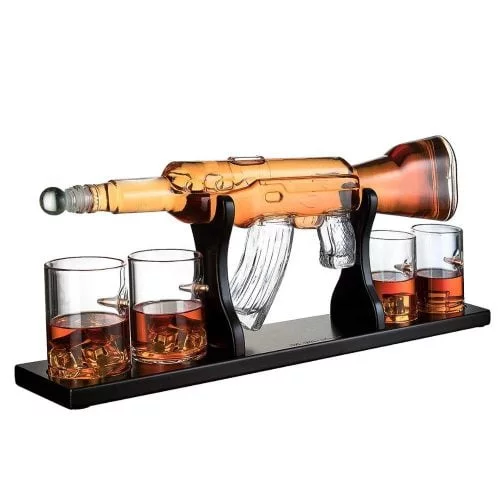
Many shoppers buy a gun bottle once for a joke gift. They do not buy it again. Some also assume the liquid is low grade when the bottle looks like a gimmick. That hurts repeat sales and long-term brand trust.
Collector demand also needs safe sharing. People post skull bottles and art bottles more often. Gun imagery can trigger mixed reactions. Some creators avoid it. Some platforms limit reach. This reduces free traffic and slows growth.
If you want a novelty program that builds collectors, choose shapes that feel like art and culture. Skull bottles often win because people treat them as décor and tradition, not a stunt. You can compare collector-style production here: how skull vodka bottles are made and skull tequila bottles cultural appeal.
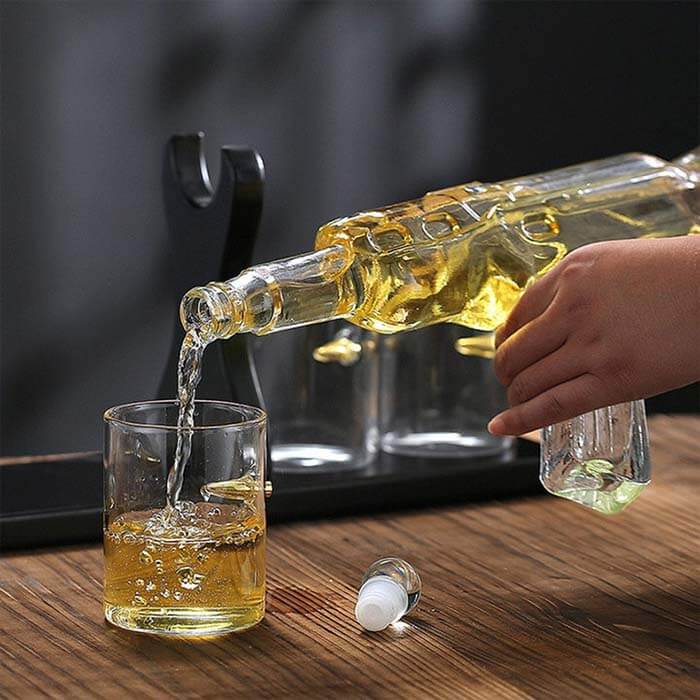
A gun bottle can look like a real firearm model. That can trigger trademark or trade dress claims. You can lose inventory and spend big on legal fights. This risk grows when you copy an iconic silhouette like a known rifle or a named classic gun.
You can lower risk with strict design rules:
Start with clean drawings and prototypes before you cut steel. This reduces rework after you pay tooling. Use a tooling workflow that protects your IP: glass bottle molds and prototypes and prototype custom bottle process.
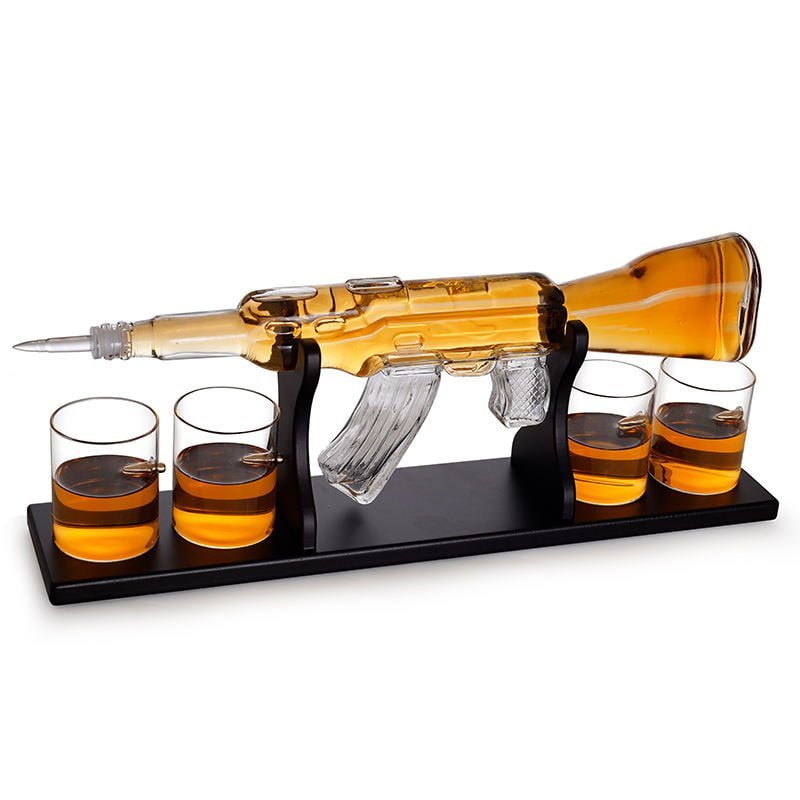
Bottle approval is not only about volume and glass. Review teams also look at confusion risk and youth appeal. A very realistic pistol bottle can look like a real weapon at first glance. That can create questions. A label that pushes “danger” or “rebellion” can add more questions.
You can lower label friction with simple moves:
Plan more time for approval when you use an unusual shape. Build your project around a stable OEM flow so you can change labels fast if needed: OEM/ODM decanters from design to production and borosilicate decanter branding options.
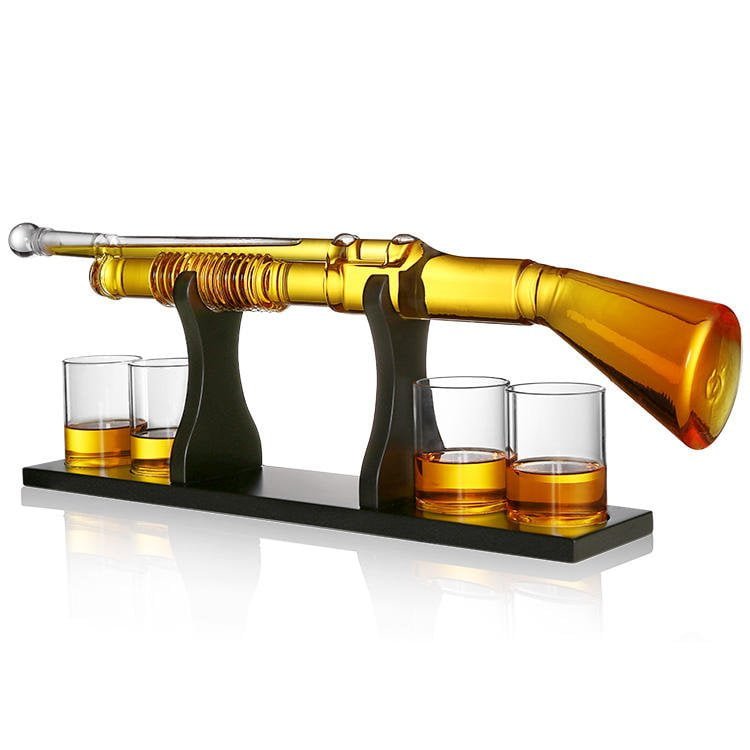
Some states push stricter rules on weapon-adjacent marketing. Rules can change fast. Even when the product stays legal, ads and posts can get limited. Many ad systems reject weapon-like images. Organic reach can also drop when a platform flags the content.
Use a launch plan that does not depend on one channel:
If you want strong novelty growth with fewer blocks, follow modern design trends that fit premium spirits. Use these guides to steer theme choices: 2025 glass packaging design trends and luxury bottle shapes for premium positioning.
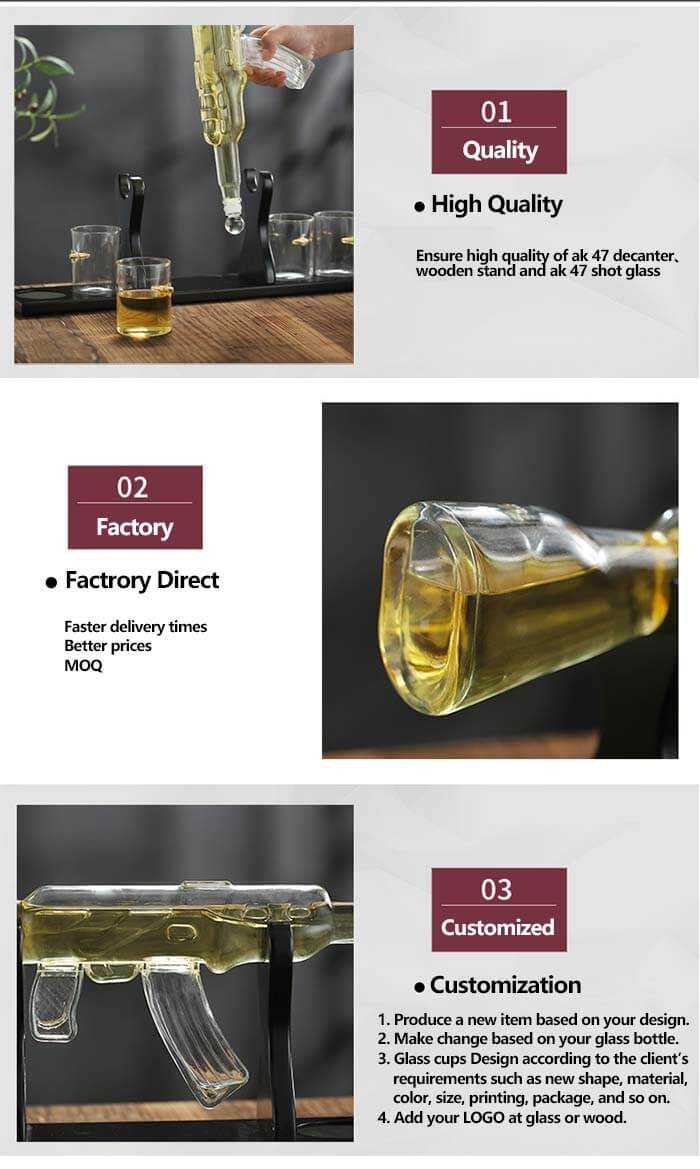
Specs decide if buyers trust your bottle. A premium bottle needs clean seams, balanced weight, and a stable base. It also needs a closure that seals tight. Many cheap novelty bottles leak or wobble. That kills repeat orders.
Use this simple spec checklist:
If your buyers care about material safety, choose lead-free glass and stable chemical resistance. These pages support that pitch: lead-free borosilicate safety benefits and chemical resistance for alcohol storage.
Borosilicate often looks clearer and stays clear longer. It can resist heat and chemicals better than standard glass. Soda-lime costs less and works for many brands, but it can show haze or scratches sooner in harsh handling.
A simple buying rule works well:
Clarity matters for novelty shapes because the buyer judges the bottle fast. A clean, bright look supports a higher price and better gifting value. If you need a clear decision guide, use: borosilicate vs soda-lime glass comparison and borosilicate long-term clarity advantage.
Gun shapes need more mold detail than round bottles. That raises tooling cost. It also raises defect risk in early runs. You need enough volume to spread mold cost and pay for sample rounds.
Most private label buyers plan around:
Do not guess your timing. Align your order with your sales season and shipping window. This reduces rushed choices and rework. Use these planning guides: best time to source decanters in China and custom shapes whisky decanters sourcing.
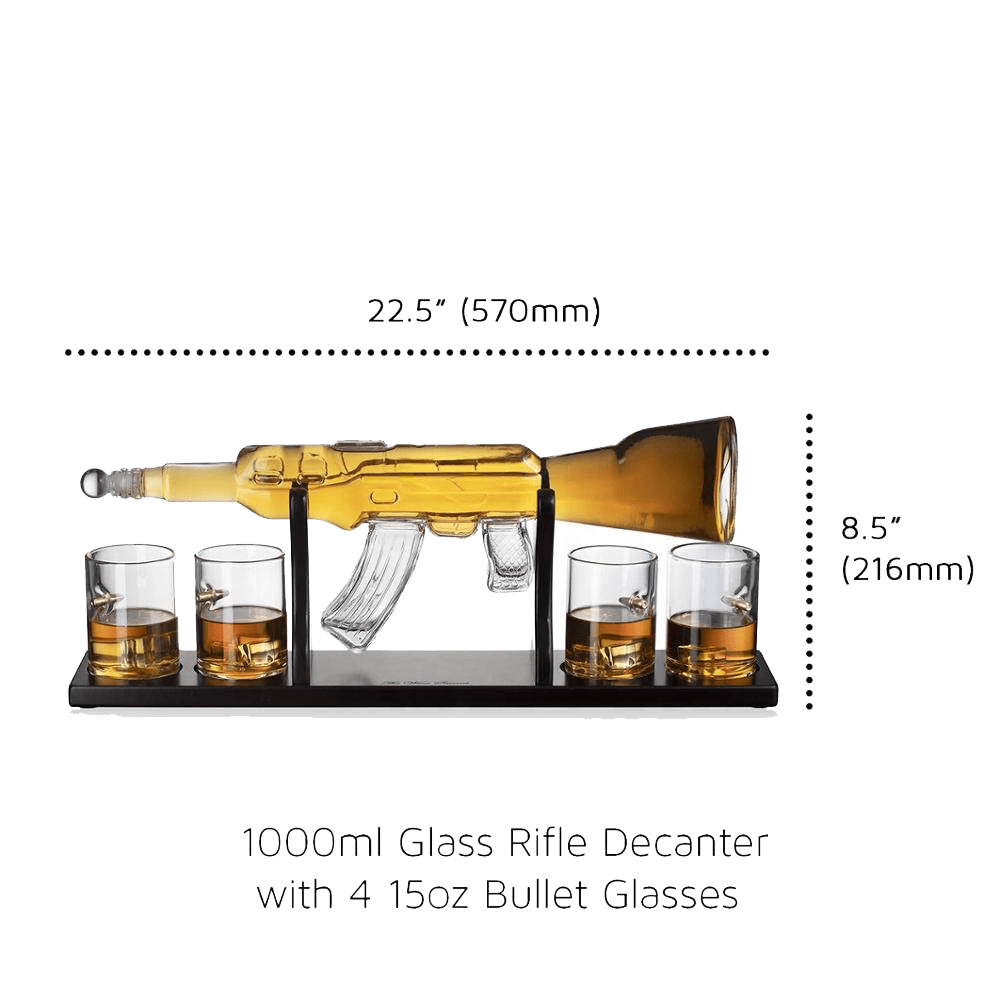
A complex bottle needs a factory that can hold tight tolerances. You want stable glass thickness, clean seams, and low leak rates. Many small shops can make a nice sample, then fail at mass production.
Use a strict vetting routine:
A factory visit helps you see real lines, real packing, and real lead times. It also helps you judge how they handle custom projects. Use these two guides for a buyer-ready checklist: how to vet supplier production capabilities and China glass factory visit guide.
Novelty shapes break more often in transit. Long “barrel” sections and thin edges chip easily. You need packaging that locks the bottle and prevents movement. You also need a drop test plan.
Use these packing rules:
If you sell as a gift set, the insert and box quality matter as much as the bottle. For broader packaging ideas and shape selection, review: unique glass bottles wholesale guide and custom bottle designs for brand personality.
Your positioning can raise or lower scrutiny. If you market the bottle as “edgy” or “dangerous,” you raise risk. If you market it as a premium collectible for adults, you lower risk. Words and photos matter as much as shape.
Use safe positioning rules:
Build the product story around glass craft and quality. That supports price and reduces “toy” vibes. Use these pages to shape the message: bestselling borosilicate whisky decanter design tips and what a whiskey decanter is used for.
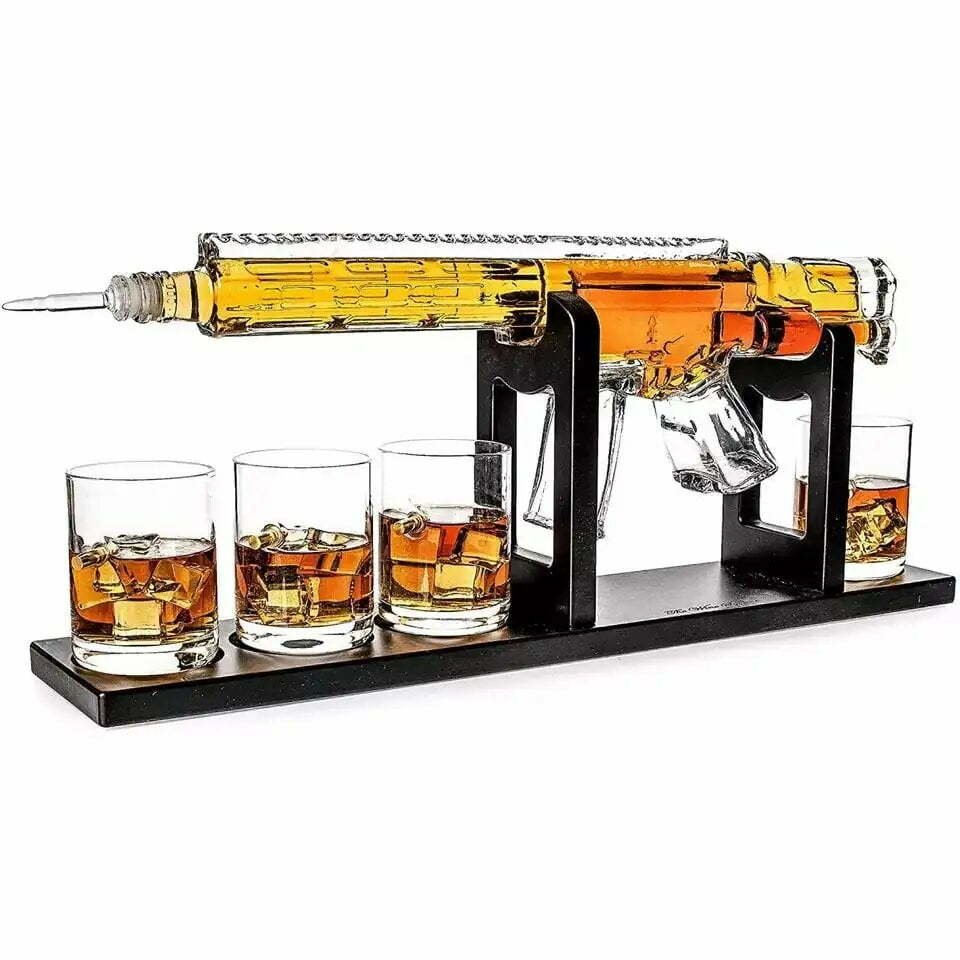
If you want novelty that scales, pick themes that feel like art and culture. These shapes often get better social sharing and lower legal stress. They also fit more gift moments and more retail shelves.
Common scalable options:
If you still want one gun SKU, pair it with two safer SKUs. This protects your full line and keeps retailers comfortable.
Is a gun shaped bottle legal to import and sell? Many markets allow it, but review and enforcement can vary by place and by marketing. Use a clear compliance workflow and a clean label zone. This helps your project flow: OEM/ODM design to production.
How do I reduce trademark risk before I pay for molds? Avoid famous firearm models and use generic silhouettes. Start with drawings and a prototype step: prototype custom bottle and bottle mold and prototype guide.
What glass should I choose for a premium novelty bottle? Borosilicate often supports a higher-end look and longer clarity. Soda-lime can work when you control QC and cost. Compare materials here: borosilicate vs soda-lime.
How do I vet a China supplier for complex custom shapes? Check capacity, QC, mold ownership terms, and packing tests. Use a strict checklist: vet supplier production capabilities.
What is a safer alternative if I want novelty with less risk? Skull, dragon, ship, and globe themes often scale better. Start with proven categories: globe decanter products and skull tequila bottle style.
