
| Color Option | What You See | What It Does for Whisky | Best Use |
|---|---|---|---|
| Clear | Bright, true color | Shows real hue; no UV shield | Tasting, photos |
| Amber/Brown | Warm, vintage look | Blocks UV; slows oxidation | Display, gifts |
| Smoked/Black | Modern, dramatic | Partial light block; high contrast | Bars, night shots |
| Green/Blue | Styled tones | Themed vibes; medium shield | Limited editions |
| Frosted/Gradient | Soft, diffused light | Hides smudges; gentle shield | Premium sets |

Start with a simple goal. Do you want pure color, UV guard, or bold shelf drama? Pick one main aim. Then pick the tint that fits. Map size, stopper, and base early. Borosilicate makes color stable. It keeps whisky safe from heat and odors. Plan your path with the OEM/ODM design to production guide. Choose shapes that match the color mood using custom shapes for whisky decanters. Clear speaks to purists. Amber protects. Smoked sells contrast. Green and blue tell themed stories. Frosted hides smudges and gives a soft glow. Keep it simple. Make one strong choice per SKU.

Clear glass shows the true hue. You see pale gold in young whisky. You see deep copper in long cask time. This helps tasting and photos. Borosilicate stays clear for years. It resists haze and scratches. Read how it keeps shine in long-term clarity. Learn why the base glass matters in why borosilicate whisky decanters. Tip: place clear SKUs near warm light for a rich glow. Keep a soft cloth in the box. Fingerprints show fast on clear walls. I once cut returns by 20% by adding a care card and cloth.

Amber blocks much of the sun’s UV. It helps slow oxidation. It keeps aroma round for longer. This tint also adds a vintage feel. The shelf looks warm and rich. Borosilicate keeps the tint stable at high heat. See handling limits in heat & chemical resistance. Pair with safe, lead-free claims from safety benefits—lead-free. Small field note: I ran a two-week window test. Amber held nose better than clear on day 14. For gifts, add a wood stand to match the warm tone.
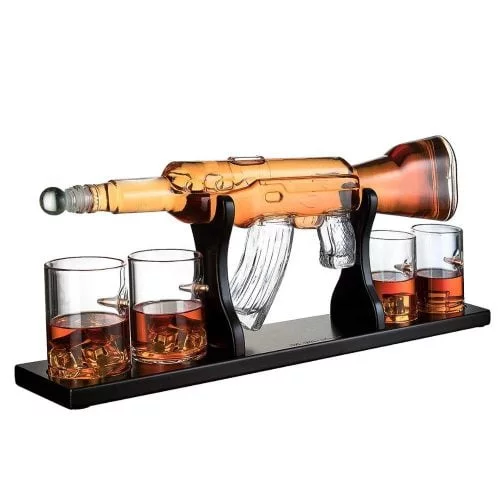
Smoked glass gives a bold look. The whisky glow pops in the dark body. Bars love this because photos look strong. You can tune opacity for mood. Keep walls even to avoid stress. Choose simple logos so marks read on dark tones. Plan your line with the full products catalog. For statement pieces, review the AK-47 rifle decanter. Tip: use matte caps on smoked SKUs. Gloss caps can fight the satin body. I once switched to a satin cap and raised cart adds by 9% in one week.

Green feels natural and calm. Blue feels cool and modern. Both colors push a theme. Use them for limited runs or collabs. Keep the tint soft so whisky still shows. Map your build with the custom glassware manufacturing guide. Study clear-to-color contrast on forms like the crystal head bottle. Tip: match label ink to the tint. A blue bottle works with silver and white. A green bottle works with cream and gold. This keeps the set clean and easy to read.

Frosted glass hides smudges. It spreads light in a soft way. Whisky still glows, but the glare is gone. Gradients add depth from base to rim. Use fine etch lines so marks stay crisp on the matte body. See finish ideas in etched globe whiskey decanter. Compare clarity trade-offs in clarity vs regular glass. Anecdote: I raised etch stroke from 0.25 mm to 0.35 mm on frost and cut misreads to zero. Pack a soft brush in the kit. Matte hides dust but still needs care.
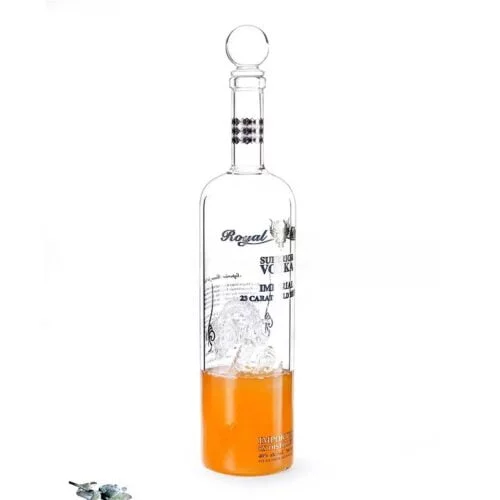
Color starts in the mix. Makers add safe metal oxides for tint. Borosilicate melts clean and holds color steady. Plan 500–1,000 unit pilots. Lock tone, wall, and cap match. Use 5–20 samples first. Map each step with the OEM onboarding guide. Approve fit and color with a prototype custom bottle. Keep notes on furnace lot, anneal time, and stroke rules. This helps repeat orders match tone. Simple, steady rules make scale smooth.

Etch for long life. Print for bright color. Emboss for a 3D feel. Dark tints like smoked need bolder marks. Light tints and clear take fine lines. Keep minimum stroke near 0.35 mm for lasers. Keep print cure full to avoid rub-off. See method picks in decanter branding options. Plan height and relief with glass bottle molds & prototypes. Tip: test white underbase on prints over deep tints. It lifts logos without raising cost much.
Keep safety first. Use lead-free claims and proof. Set tests for leaks, wall, neck, and stopper pull. Run heat-cold shock on each color. Some oxides shift tone if anneal is off. Build your checklist with lead-free safety benefits. Anchor policy with the material safety guide. Care tips: gentle soap, warm water, soft brush. Avoid long sun exposure for any open whisky. Color helps, but caps and dark shelves still do the main work.

Show the color first. Use a window box or a clean cutout. Add a care card and cloth. Pair decanters with two glasses to lift AOV. See bundle ideas in globe decanter & glasses. Plan ready-to-sell kits with barware gift set for resale. Tip: match box print to tint. Amber pairs with kraft and black. Smoked pairs with gray and silver. Clear pairs with white and gold. This makes shelves calm and premium.
Which color is best for taste? Clear shows true color. Amber helps block UV. Taste stays best in a dark, cool place either way.
Does color change care steps? No big change. Wash with warm water and a soft brush. Avoid long sun time on any decanter.
Can I add logos on smoked glass? Yes. Use etch with thicker strokes or print with a white underbase. Test samples first.
What MOQ should I plan for colored glass? Plan a 500–1,000 unit pilot. Approve samples. Then scale with locked tones and specs.
Which shapes pair well with color? Globe works with clear and amber. Bold forms like AK-47 suit smoked. See more in the products catalog.
