
| Key takeaway | What it means for AK-47 whiskey bottle collectors | Quick action |
|---|---|---|
| This is a niche collectible | Most buyers want shelf impact, gifts, and bar display | Collect for looks first, not resale |
| Borosilicate can be a better pick | It supports clarity, durability, and heat-change resistance | Ask for material proof and lead-free tests |
| Fakes and weak copies exist | Thin walls and soft mold detail kill value | Check thickness, seams, and closure fit |
| Pouring problems are common | Long shapes can drip, glug, or trap air | Do a water pour test before display |
| Packaging decides breakage | Rifle shapes need full-length support | Demand strong dividers and drop tests |
| Risk is higher than skull/animal shapes | Weapon-like visuals can trigger complaints or platform limits | Use safer finishes and clear branding |
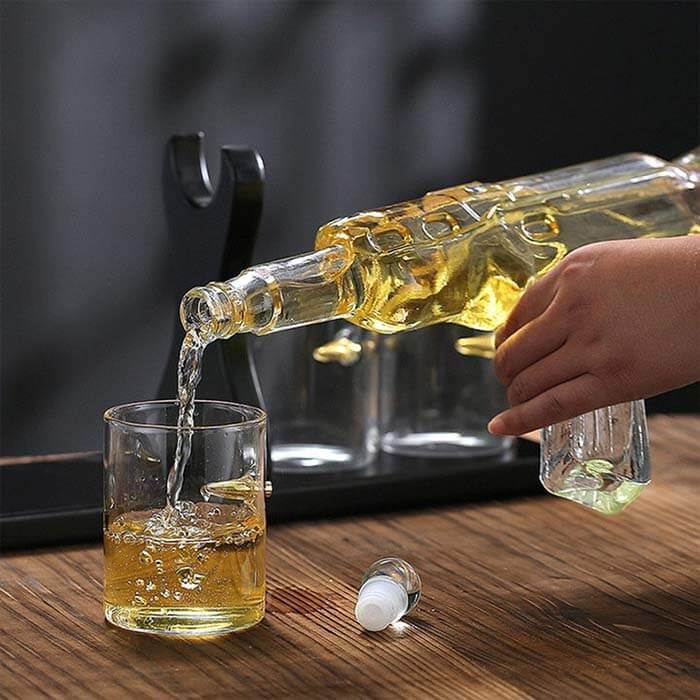
AK-47 shaped whiskey bottles sit in a small corner of the decanter world. People buy them for display, gifts, and themed bars. Many collectors keep them sealed or refill them with better spirits. That behavior matters. It means the glass and build quality often matter more than the original liquid.
A good 2026 collection starts with two goals: clean design and safe ownership. Clean design means sharp detail, clear glass, and a stable base. Safe ownership means smart storage, strong packaging, and low-leak closures.
Start your research with a real product range. The fastest reference point is the AK-47 whiskey decanter collection. If you also collect tequila-themed rifle shapes, compare style and positioning with a unique tequila decanter in AK-47 design.
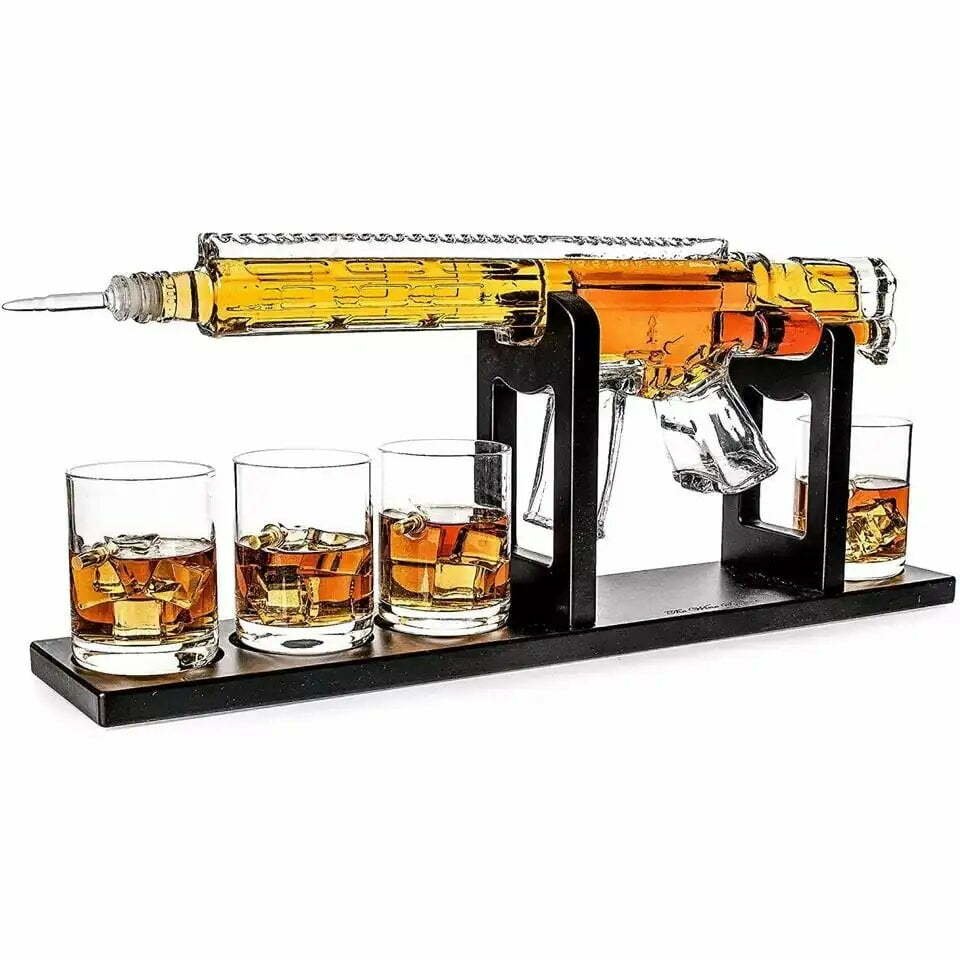
Some AK-47 items are true decanters. They seal well. They pour well. They can handle regular use. Others are “one-time bottles” that look good but leak, drip, or feel thin. A collector should label each piece in the cabinet as one of three types: use, display, or gift.
A “use” decanter needs a reliable neck finish and a stable base. A “display” piece can be less perfect, but it still must avoid sharp seams and weak corners. A “gift” set should include a stand and a strong box so the buyer feels value fast.
If you want a functional baseline, review what a whiskey decanter is used for. For themed retail sets, the barware gift set for resale page helps you think like a buyer, not only a collector.
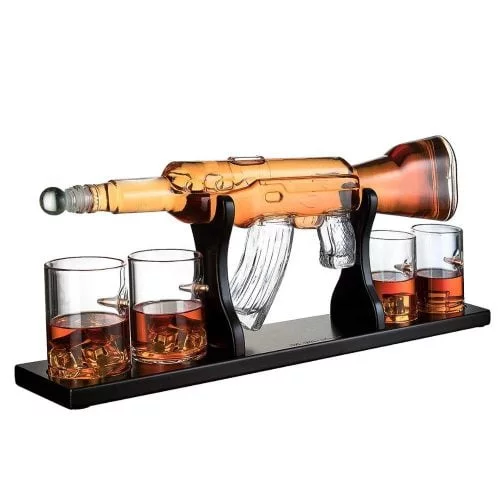
Material choice changes how the bottle looks after months on a shelf. It also changes how it handles small shocks and temperature change. Many novelty bottles use soda-lime glass because it is common and cost-friendly. Borosilicate glass can be a better choice when you want clean clarity and strong performance.
Collectors can use simple checks. Ask the seller to state the glass type in writing. Ask for lead-free proof if the piece touches liquid. Check if thin areas feel “hollow” or weak when you tap lightly. A good piece feels consistent from base to barrel.
If you need a straight comparison, use borosilicate vs soda-lime glass and confirm health standards with safety benefits of lead-free borosilicate glass. For storage stability, the guide on heat and chemical resistance for alcohol storage helps you set realistic expectations.
AK-47 shapes attract copies because the design sells on sight. Many copies look fine in photos and fail in hand. The most common issues are soft details, uneven thickness, rough seams, and sloppy neck finishes. These problems reduce both value and safety.
Use a short authenticity checklist:
For buyers who source in volume, prototype control matters even more. A photo sample can hide defects. A production sample tells the truth. Learn the process with glass bottle molds and prototypes and the deeper look at glass bottle mold craftsmanship.
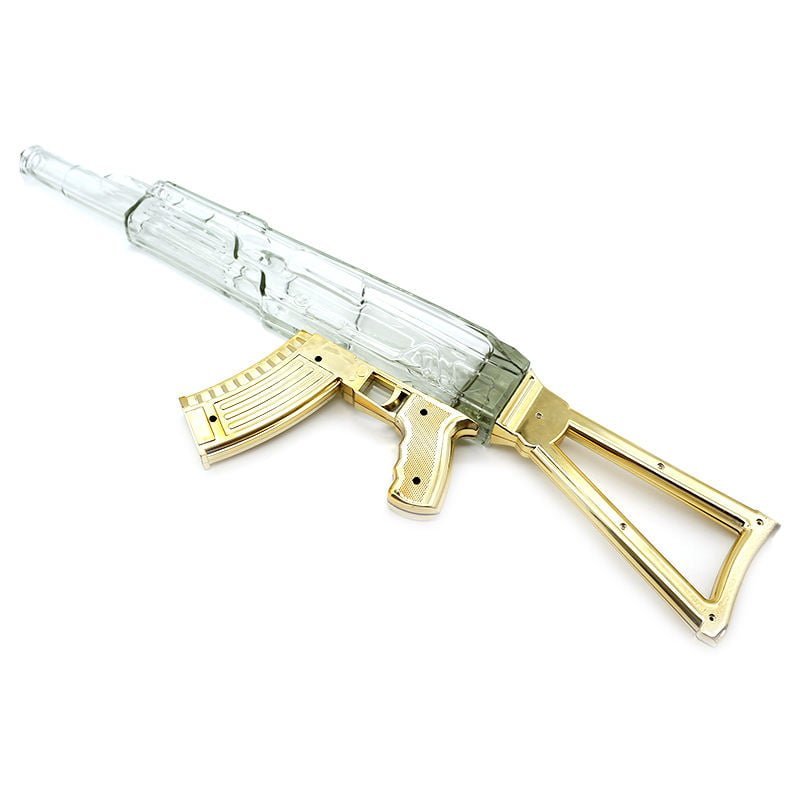
Rifle shapes create awkward liquid flow. Long channels can trap air. Wide openings can “glug” and splash. Some designs drip because the lip angle is wrong. Collectors can solve most surprises with a basic test routine before the bottle hits the main shelf.
Do these quick tests:
Closure choice is a big deal for long shapes. Cork can look classic but fit can vary. Screw caps can seal better but need a clean thread. Use a guide to custom lid types to understand trade-offs. If you also care about the “premium look,” align decoration and closure with borosilicate decanter branding options.
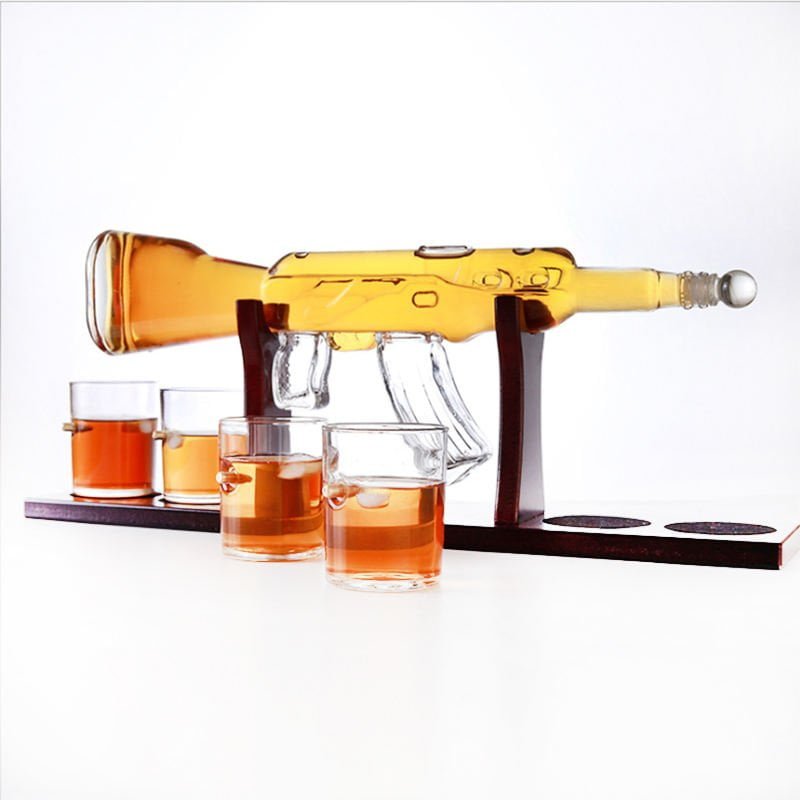
Collectors often lose bottles to simple shelf problems. The shape is long. The center of gravity can sit far from the base. A small bump can tip the piece and chip the barrel or stock. A stand or cradle reduces that risk fast.
Use these storage rules:
If liquid stays inside, treat it like any spirit. Stable temperature helps flavor. Tight seals reduce evaporation. For function-first thinking, use whiskey decanter purpose as a reference. For display bundles and themed sets, the barware gift set for resale page helps you judge what looks “complete” on a shelf.
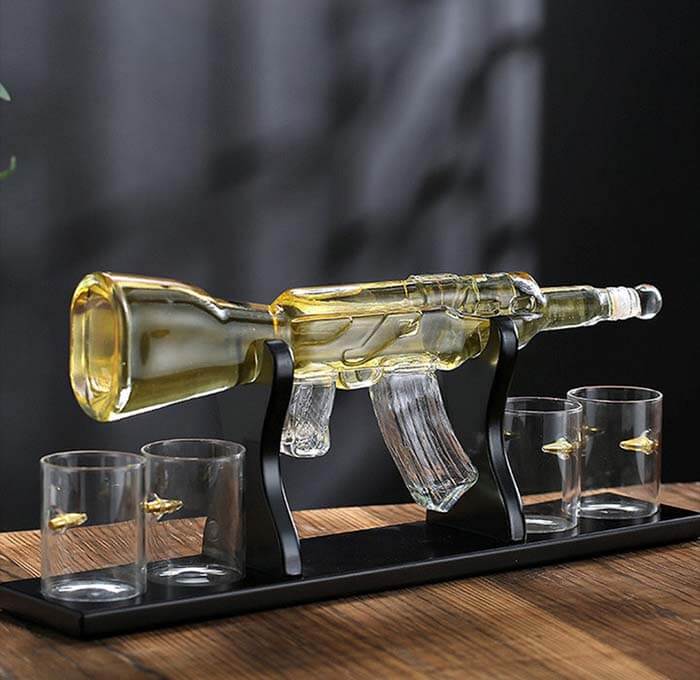
Many collectors keep the bottle after use. Cleaning matters because old alcohol, sugar, or flavor oils can leave a film. That film dulls clarity and can smell bad. Harsh scrubbing can scratch glass and ruin the look.
Use a safe cleaning routine:
If you need deep cleaning, use proven glass-safe methods. A careful approach reduces haze and odor. The guide on sterilizing glass bottles helps with safe steps and timing. For material behavior and long-term display clarity, review long-term clarity and optical advantage and the basics of material safety for food-grade containers.
Rifle shapes break in predictable places: thin edges, long barrel sections, and neck zones. Weak cartons turn a cool collectible into refunds and bad reviews. Good packaging supports the full length and locks the neck in place.
Ask for these packaging features:
Timing also matters. Busy sourcing seasons can lead to rushed packing. Plan early so the factory has time to do packaging right. Use best time to source decanters in China and check real execution steps in the step-by-step OEM onboarding guide. If you visit a supplier, the China glass factory visit guide helps you verify packing lines in person.
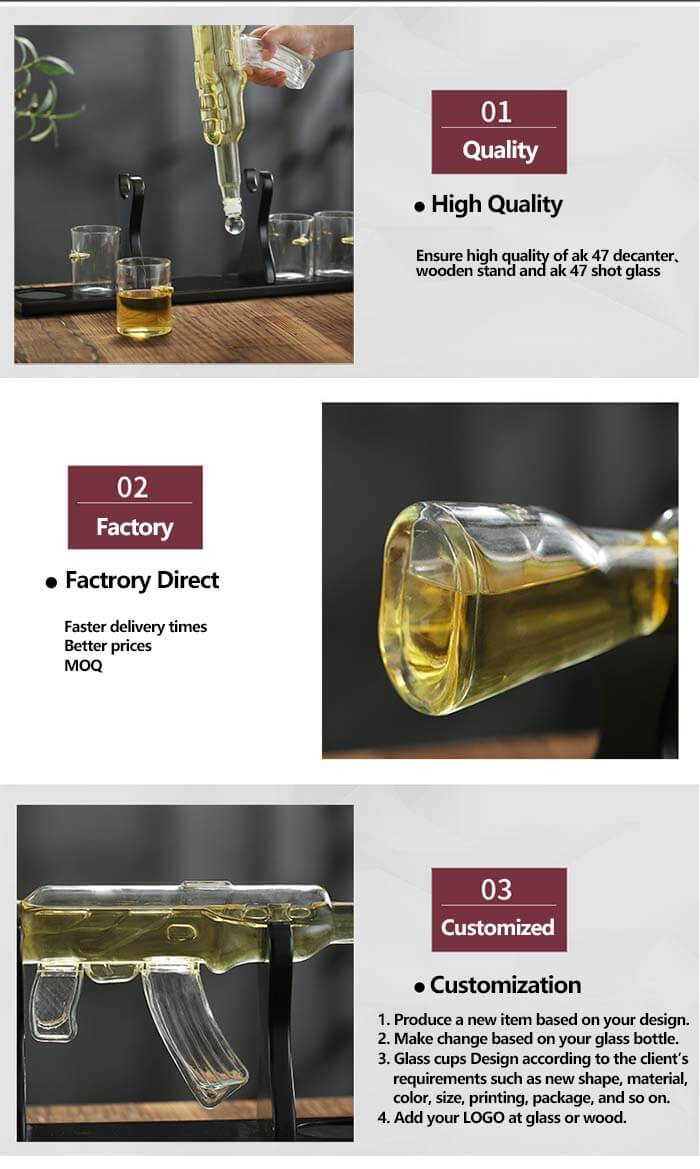
A rifle-shaped decanter looks complex, but the sourcing logic is simple. Your main costs come from mold work, reject rate, decoration, and packaging. Your main risk comes from slow sales. That is why many buyers start with a small test run using an existing shape, then move to a custom mold after repeat orders.
Key sourcing tips:
If you want supplier direction, start with China borosilicate decanter suppliers and plan the full process using OEM/ODM decanter design to production. For shape flexibility, compare options in custom shapes whisky decanters.
A factory can make round bottles and still fail on rifle shapes. Long novelty designs need stable thickness control and consistent mold care. A good supplier shows process control with real records, not only nice photos.
Ask for proof:
Region also matters. Different areas can have different lead times, cost structures, and supply chains. Use how to vet supplier production capabilities as your baseline. For region comparison, check Hebei vs Guangdong borosilicate suppliers and the broader map in top glass manufacturing regions in China.
Decoration can lift perceived value fast, but it can also raise complaints if it feels too weapon-like. Many buyers prefer clean, gift-friendly styling. Clear glass and simple accents often work better than heavy graphics on an AK shape.
Good decoration choices:
Color and branding should match your target. A bar gift SKU can use bright cues. A home bar SKU can use simple black-and-gold accents without “real weapon” styling. For planning color and finish, use glass colors and whisky shelf appeal and broader positioning tips from personalized glass bottles.
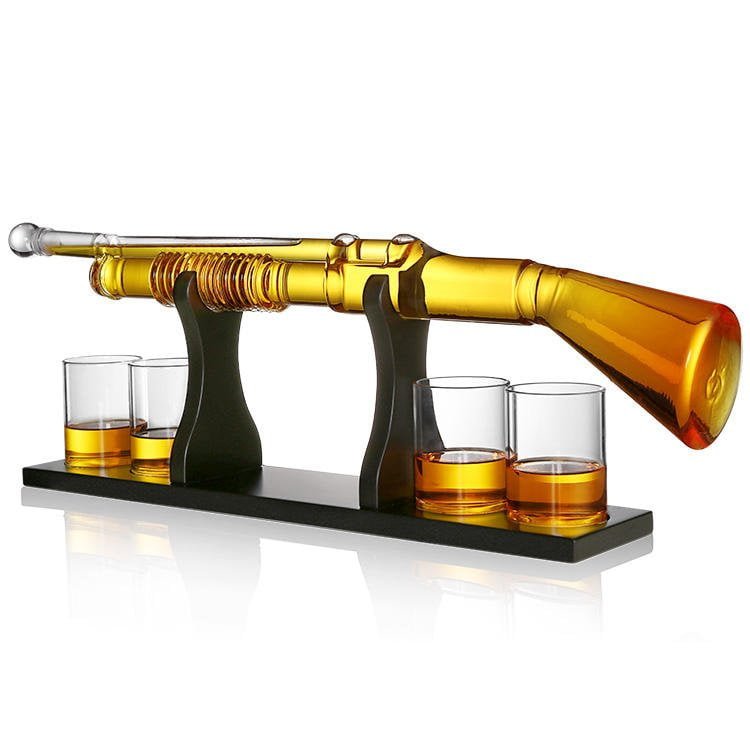
Gun-themed designs can face more friction than skull, animal, or ship shapes. Some platforms limit weapon-like visuals. Some markets have stricter rules on how products look in ads. Travel can also create trouble. Security staff can treat realistic shapes as suspicious, even when empty.
Collectors and buyers can reduce risk with design choices:
If you want novelty with fewer headaches, compare alternative shapes and safer themes. Use the different shapes of glass bottles for a broad view and the novelty positioning guide on tequila bottle guns and novelty for practical framing. A mixed catalog often sells better than a single gun-only lineup.
Are AK-47 whiskey bottles a smart “investment collectible” in 2026? They work best as display collectibles and gifts. Most demand is impulse-driven, not scarcity-driven. Build the collection for shelf impact. Start product research with the AK-47 whiskey decanter category.
How can I tell if a rifle decanter is borosilicate glass? Ask for written material specs and lead-free compliance. Good borosilicate pieces often show stable clarity and consistent thickness. Use what is a borosilicate glass bottle for basic checks.
What defects show up most on AK-shaped glass bottles? Common issues include thin barrel walls, rough seams, stress lines near sharp edges, and poor neck finish fit. Mold knowledge helps you spot weak copies fast. See glass bottle molds and prototypes.
What should I test before I display a filled decanter? Do a water pour test, check for drips, and confirm the cap seals overnight. Closure choice drives leak risk. This guide helps: custom lid types for bottles.
How do I reduce breakage when shipping rifle-shaped bottles? Demand full-length foam support, strong dividers, and drop-tested cartons. Use a clear onboarding process like the step-by-step OEM onboarding guide.
What novelty shapes pair well with AK-47 designs for wider sales? Skulls, dragons, globes, ships, and agave-themed bottles often face less friction and reach more buyers. Start exploring shape options with custom shapes whisky decanters and broader tequila bottle designs.
